
A field guide to the emblems of the orders and the lodge
Thirty-eight emblems: the crosses of the crusading orders and the orders of chivalry, the working tools of the stonemason, the symbols of the lodge, and the emblems of the Royal Arch, the Scottish Rite, the Rosicrucians, the Bavarian Illuminati and the Odd Fellows. What each shows, what it is taken to mean, and where you will see it.
騎士団の十字・石工の道具・結社の象徴、そして上位位階と諸結社の徽章を紹介します。
THE ORDERS SERIES IN BRASS →GUIDES TO THE ORDERS AND THE LODGE →
Each emblem is drawn in one of its usual forms. Signs marked BRASS are in our Orders Series. The F1 and F2 buttons are a colour preview, not a brooch render.
騎士団の十字Crosses of the orders11
The crusading orders wore their cross on the mantle, the shield and the banner, each in its own shape and colour; the kings who founded later orders of chivalry gave them crosses of their own.
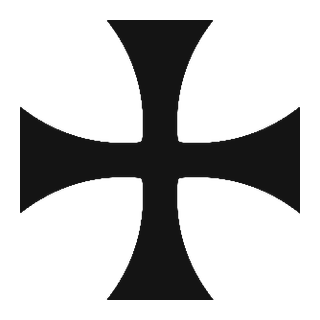 Templar crossCross pattée, Knights TemplarBRASS
A cross whose arms widen towards their ends. The Knights Templar, the warrior monks founded around 1120 to guard pilgrims on the roads to Jerusalem, wore it in red on their white mantles: the blood of Christ on a life of purity.
WHERE IT IS SEEN Templar seals and churches across Europe; today the Masonic Knights Templar, and countless badges and medals that take the same shape.
William of Tyre records that Pope Eugenius III granted the red cross around 1147. The order was suppressed in 1312, and its last Grand Master, Jacques de Molay, was burned in Paris in 1314.
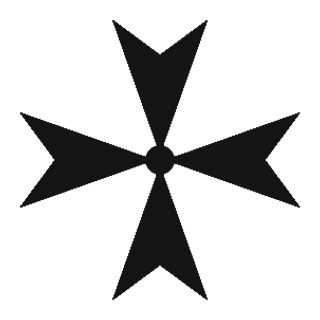 Maltese crossCross of St John, Hospitaller crossBRASS
Four arrowhead arms with eight points. It is the cross of the Knights Hospitaller, founded to nurse pilgrims in Jerusalem; its eight points are read as the eight beatitudes, or the eight “tongues”, the nations into which the knights were grouped.
WHERE IT IS SEEN The Sovereign Military Order of Malta, St John Ambulance, and the badges of fire brigades, whose cross of St Florian takes the same form.
The Hospitallers held Rhodes from 1310 to 1522 and Malta from 1530 until Napoleon took the island in 1798; from Malta the cross took its name.
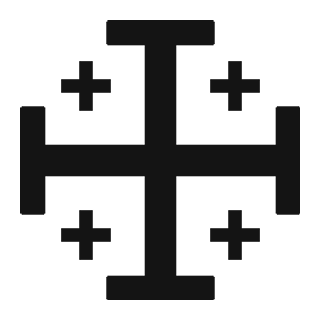 Jerusalem crossCrusader’s cross, fivefold crossBRASS
A great cross with a crossbar at the end of each arm, and a small cross in each corner: the five wounds of Christ, or Christ and the four evangelists.
WHERE IT IS SEEN The arms of the crusader Kingdom of Jerusalem after 1099; today the Franciscan Custody of the Holy Land, the Equestrian Order of the Holy Sepulchre, and pilgrims to Jerusalem.
The kingdom’s arms were gold on silver, metal on metal, which broke the first rule of heraldry; it was allowed for Jerusalem alone, as a kingdom above all others.
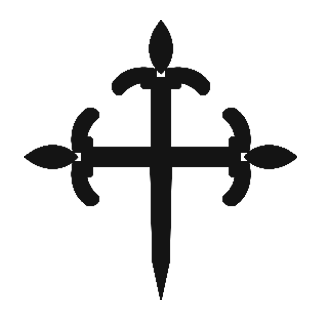 Cross of SantiagoCross of St James, Order of SantiagoBRASS
A red cross whose lower arm is a sword blade and whose other arms end in lilies: the sword of St James the Apostle, patron of Spain, and the honour of the knight who carries it.
WHERE IT IS SEEN The Order of Santiago, founded around 1170 in León and Castile to fight in the Reconquista; the pilgrims’ road to Santiago de Compostela, and Spanish heraldry.
In Las Meninas Velázquez painted himself with the red cross on his chest. He was admitted to the order only in 1659, three years after the painting was finished; the cross was added later.
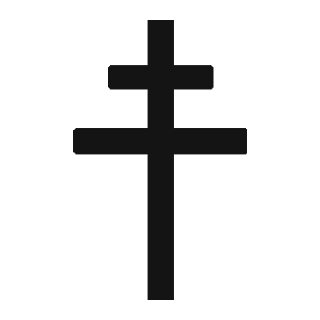 Cross of LorrainePatriarchal cross, two-barred crossBRASS
A cross with two bars, the upper shorter: the board set over Christ’s head and the arms. It is the cross of a patriarch or archbishop in heraldry, and came to the Dukes of Lorraine from René of Anjou.
WHERE IT IS SEEN Lorraine and Hungary; the Free French under de Gaulle, who took it as their emblem in 1940 against the swastika; the campaign against tuberculosis, whose sign it has been since 1902.
The sign of the Free French stands on the great granite cross at Colombey-les-Deux-Églises, de Gaulle’s village.
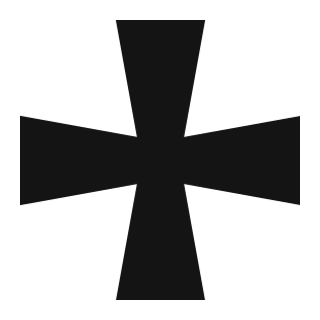 Teutonic crossCross of the Teutonic Order
A black cross with straight, widening arms, worn on white by the Teutonic Order, the German order founded as a field hospital at the siege of Acre in 1190 and made a military order in 1198.
WHERE IT IS SEEN The order’s castles in Prussia and the Baltic, the greatest of them Malbork; its arms, and the arms of Prussia that grew out of its lands.
The black cross passed to Prussia, which made it the Iron Cross in 1813. The order itself lives on in Vienna as a religious order of priests and sisters.
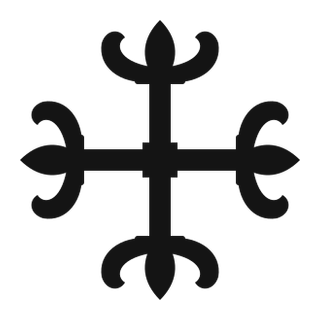 Cross of CalatravaCross fleury
A red cross whose four arms end in lilies, the badge of the Order of Calatrava, founded in Castile in 1158 by Cistercian monks to hold the fortress of Calatrava against the Almohads.
WHERE IT IS SEEN Spanish heraldry and churches; the same cross in green is the badge of the Order of Alcántara.
Calatrava was the first military order founded in Castile. The Spanish crown took over its grand mastership in the reign of Ferdinand and Isabella, and today it is an honorific order.
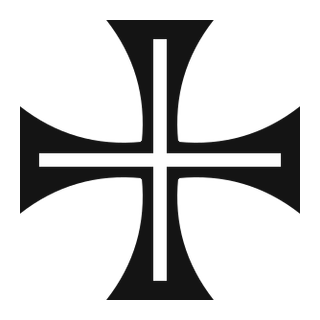 Cross of the Order of ChristPortuguese cross, Cross of Christ
A red cross pattée with a white cross inside it, the badge of the Order of Christ, founded in Portugal in 1319 to take over the lands of the suppressed Templars.
WHERE IT IS SEEN The sails of the Portuguese caravels of the age of discovery; the flag of Madeira, the roundel of the Portuguese Air Force, and Portugal’s honours.
Prince Henry the Navigator was its governor, and the order’s wealth paid for much of the exploration of the African coast. Vasco da Gama sailed to India under its cross.
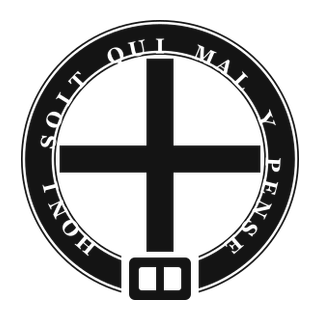 Order of the GarterHoni soit qui mal y pense
The red cross of St George within a blue garter, buckled, bearing the motto Honi soit qui mal y pense, “shame on him who thinks evil of it”. It is the oldest English order of chivalry, founded by Edward III around 1348.
WHERE IT IS SEEN St George’s Chapel at Windsor Castle, where the banners of the knights hang above their stalls; the arms of the United Kingdom, ringed by the garter.
The order has the sovereign and twenty-four Knights Companion. A popular story says the king tied on a garter dropped by a countess at a ball; it is first told two centuries later.
 BeauséantThe Templar banner
The battle banner of the Knights Templar: black above, white below. Its name is the old French for a piebald horse, and it was also the Templars’ battle cry.
WHERE IT IS SEEN The Templar host in battle; today the Masonic Knights Templar, and the heraldry of Templar towns.
The Templar Rule forbade a knight to leave the field while the banner still flew. Later writers read its colours as the order’s harshness to its enemies and its gentleness to its friends.
 Cross and crownIn hoc signo vinces
A cross passing through a crown: the crown of glory that follows the cross of suffering, and the kingship of Christ. William Penn put it in a phrase in 1669: “No cross, no crown.”
WHERE IT IS SEEN The Masonic Knights Templar of the York Rite, often with the words In hoc signo vinces, “in this sign you will conquer”; church windows, hymnals and gravestones.
The Latin words are those Constantine is said to have seen in the sky with the cross before the battle of the Milvian Bridge in 312.
石工の道具Working tools7
The tools of the medieval stonemason, each given a moral lesson as the new member is shown it: to measure the day, to shape the stone, to build true.
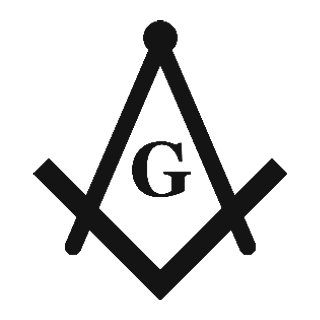 Square and compassesThe emblem of FreemasonryBRASS
The two tools of the architect, set across one another: the square to keep one’s actions true, the compasses to keep one’s desires within bounds. Often a G sits between them, for God, or for geometry.
WHERE IT IS SEEN Lodges, rings, aprons and gravestones throughout the world: the best-known emblem of Freemasonry.
The position of the two shows a member’s degree: in the first, both points of the compasses lie under the square; in the third, both lie above it.
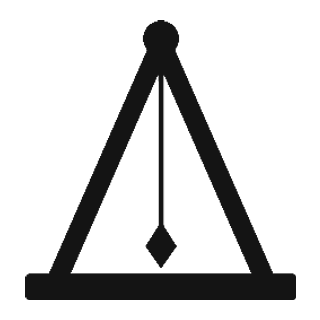 LevelThe jewel of the Senior WardenBRASS
A frame with a plumb line, used to lay a course of stone true. In the lodge it stands for equality: all members meet on the level, whatever their station outside.
WHERE IT IS SEEN The jewel worn by the Senior Warden, one of the officers of every lodge.
Masons part with the words “meet on the level, act by the plumb and part upon the square”.
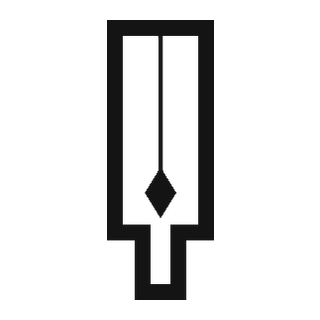 Plumb ruleThe jewel of the Junior WardenBRASS
A board with a weighted line, for raising a wall upright. It teaches walking uprightly before God and others.
WHERE IT IS SEEN The jewel of the Junior Warden; the tools of the second degree, with the square and the level.
The prophet Amos saw the Lord standing on a wall with a plumb line in his hand: “I will set a plumbline in the midst of my people” (Amos 7:8).
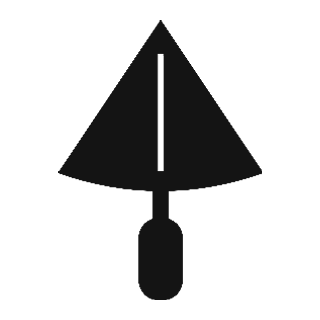 TrowelThe cement of brotherly loveBRASS
The tool that spreads the mortar binding stones into one wall: the brotherly love that binds members into one company.
WHERE IT IS SEEN In American lodges the working tool of the Master Mason, the third degree.
In Royal Arch masonry the sword and the trowel recall the builders of the second Temple, who worked with a tool in one hand and a weapon in the other (Nehemiah 4:17).
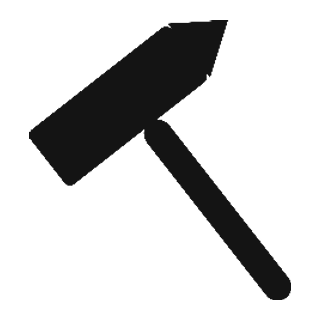 Common gavelA working tool of the Entered ApprenticeBRASS
The stonemason’s hammer for knocking the rough corners off a stone. It reminds the new member to shape his own character, removing “the vices and superfluities of life”.
WHERE IT IS SEEN The tools of the first degree; the Master of the lodge governs the meeting with a gavel.
A short knock of the gavel opens and closes the lodge, as it does a meeting of a court or a parliament.
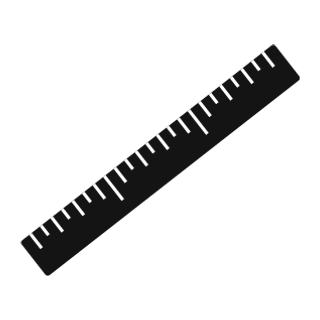 Twenty-four-inch gaugeA working tool of the Entered Apprentice
A rule two feet long, divided into twenty-four inches: the hours of the day, to be divided into three parts of eight, for work, for prayer and the help of others, and for rest.
WHERE IT IS SEEN The first of the tools presented to a new member, with the gavel and, in English lodges, the chisel.
It is the tool for measuring the work, as the day measures a life; Masonic writers like to pair it with the hourglass.
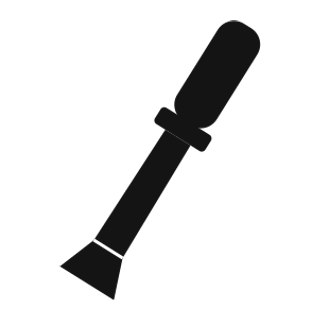 ChiselA working tool of the Entered Apprentice
The mason’s chisel, driven by the gavel to cut and smooth stone: the advantages of education, by which a mind is shaped as a rough stone is dressed.
WHERE IT IS SEEN English and many European lodges, where it is presented to the new member with the gavel and the gauge.
The gavel gives the force and the chisel directs it: together they are read as resolution guided by knowledge.
結社の象徴Symbols of the lodge13
The furniture, floor and pictures of the lodge room, drawn from the Bible, from geometry and from the legend of the building of Solomon’s Temple.
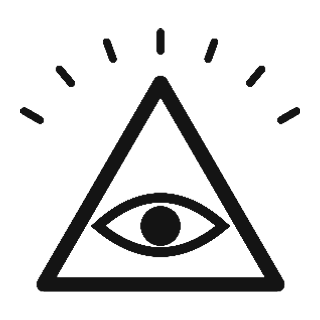 All-seeing eyeThe Eye of ProvidenceBRASS
An eye in a triangle, sending out rays of light: the watchfulness of God over every thought and deed.
WHERE IT IS SEEN Lodge rooms and certificates; churches since the Renaissance, where the triangle is the Trinity; the reverse of the Great Seal of the United States.
The eye on the Great Seal, designed in 1782, was not a Masonic choice: it became common in Masonic imagery only in the 1790s, after Thomas Smith Webb included it in his handbook of 1797. Its link with the Bavarian Illuminati is later still, a story popularised in the 1970s.
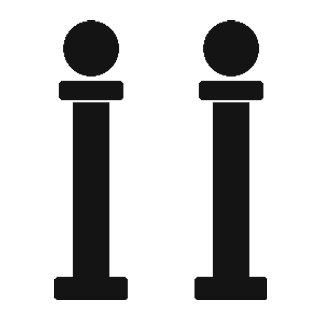 Two pillarsBoaz and JachinBRASS
The bronze pillars at the porch of Solomon’s Temple: “he set up the right pillar, and called the name thereof Jachin: and he set up the left pillar, and called the name thereof Boaz” (1 Kings 7:21). They stand for strength and establishment.
WHERE IT IS SEEN The entrance of every lodge room; tracing boards of the second degree, often with globes on top for the earth and the heavens.
The names are usually read as “he shall establish” and “in it is strength”.
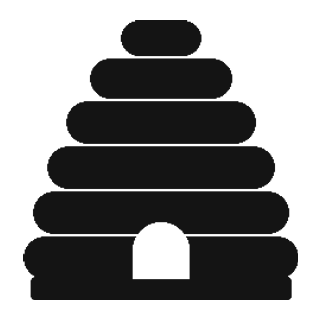 BeehiveThe emblem of industryBRASS
Every bee working for the good of the hive: industry, and cooperation in a common purpose.
WHERE IT IS SEEN The Master Mason’s degree in American lodges; the state emblem of Utah, where the Latter-day Saints took it as the sign of their settlers.
The beehive was a favourite emblem of the eighteenth and nineteenth centuries, from Masonic aprons to the banners of building societies and cooperative stores.
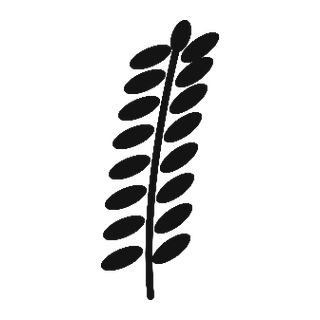 Sprig of acaciaAn evergreenBRASS
In the legend of Hiram Abiff, the architect of Solomon’s Temple, a sprig of acacia marked his hidden grave. Evergreen, it stands for the immortality of the soul.
WHERE IT IS SEEN The third degree and Masonic funerals, where members drop a sprig of evergreen into the grave.
The acacia was chosen, it is thought, because the Ark of the Covenant was built of acacia wood, shittim in the King James Bible.
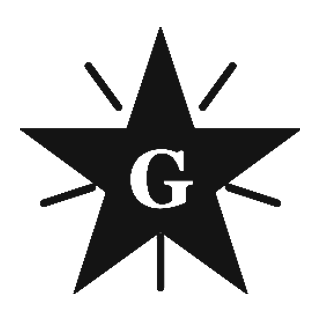 Blazing starThe star at the centre of the lodgeBRASS
A five-pointed star with rays, often with a G at its heart, set at the centre of the lodge floor: divine providence, or the star that led the Magi.
WHERE IT IS SEEN The mosaic pavement and the tracing boards of the first degree; the floor cloths of eighteenth-century lodges.
It is one of the three “ornaments” of the lodge, with the mosaic pavement and the indented border round it.
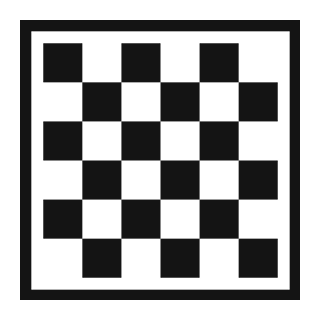 Mosaic pavementThe chequered floorBRASS
The black and white floor of the lodge, for the light and dark, joy and sorrow, good and evil that make up every life.
WHERE IT IS SEEN The floor of lodge rooms the world over, and the tracing boards; it has given the chequered floor its place in popular images of Freemasonry.
It is said to recall the floor of Solomon’s Temple, though the Bible does not describe one.
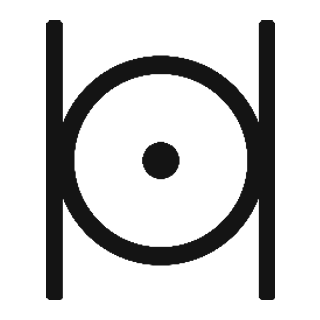 Point within a circleBetween two parallel linesBRASS
A point with a circle drawn around it: the individual and the bounds of his conduct. The two lines on either side are the two St Johns, the Baptist and the Evangelist, patrons of the lodge.
WHERE IT IS SEEN Lodge rooms, tracing boards and Masonic jewellery.
The feasts of the two St Johns, at midsummer and midwinter, were the days lodges traditionally met to install their officers.
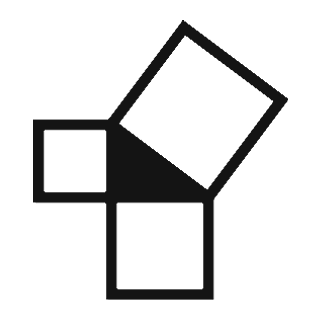 Forty-seventh problem of EuclidThe Pythagorean theoremBRASS
Squares drawn on the three sides of a right-angled triangle: the square on the longest side equals the other two together. It stands for the love of the arts and sciences.
WHERE IT IS SEEN The jewel of a Past Master, the member who has served a year as Master of the lodge.
It is the forty-seventh proposition in the first book of Euclid’s Elements. Masonic lore says Pythagoras sacrificed a hecatomb when he discovered it, and cried “Eureka”, a cry that belongs to Archimedes.
 Rough and perfect ashlarThe stones of the lodgeBRASS
Two blocks of stone: the rough one as it comes from the quarry, and the perfect one, dressed square. A person before and after education and self-improvement.
WHERE IT IS SEEN Lodge rooms, where the two stones often stand beside the officers’ chairs; the tracing boards of the first degree.
An ashlar is a block of stone cut square for building; the word comes through French from the Latin axis, a board.
 Letter GGod and geometry
The letter G, hung over the Master’s chair or set between the square and compasses: God, the Great Architect of the Universe, and geometry, the science on which the craft was founded.
WHERE IT IS SEEN Lodge rooms and Masonic jewellery in the English-speaking world.
The letter only works in English and a few related languages. Lodges elsewhere use other letters, or the Hebrew letter yod, or none.
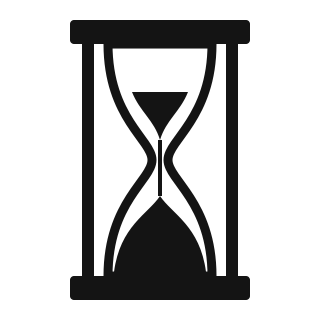 HourglassAn emblem of human life
The sand running from one glass into the other: the shortness of human life, and the passing of time that cannot be recalled.
WHERE IT IS SEEN The Master Mason’s degree, with the scythe of time; old Masonic certificates and gravestones.
Eighteenth-century gravestones, Masonic or not, often carry the hourglass, sometimes with wings: time flies.
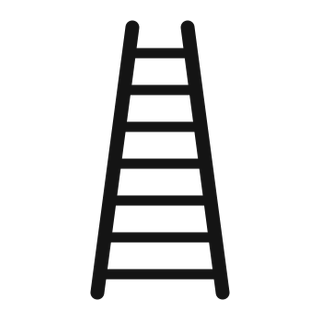 Jacob’s ladderFaith, hope and charity
The ladder Jacob saw in a dream, “set up on the earth, and the top of it reached to heaven” (Genesis 28:12). In the lodge its three principal rungs are faith, hope and charity.
WHERE IT IS SEEN The tracing board of the first degree, rising from the Bible to a star.
Charity is set at the top, after Paul: “and now abideth faith, hope, charity, these three; but the greatest of these is charity” (1 Corinthians 13:13).
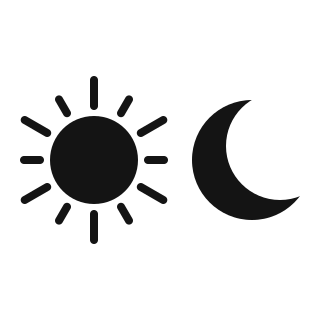 Sun and moonThe lesser lights
The sun to rule the day and the moon to rule the night: with the Master of the lodge, they are the three “lesser lights”, a reminder that the lodge should be governed with the same regularity.
WHERE IT IS SEEN Tracing boards and aprons, on either side of the Master’s chair; old lodge banners.
The three “great lights” are the volume of sacred law, the square and the compasses.
上位位階と諸結社Higher degrees & fraternities7
The emblems of the degrees beyond the first three, and of the friendly societies that grew up beside the lodges in the eighteenth and nineteenth centuries.
 KeystoneThe Mark Master’s stoneBRASS
The wedge-shaped stone at the top of an arch, which locks the others in place. In the Mark degree a stone first rejected by the builders turns out to be the keystone: “the stone which the builders refused is become the head stone of the corner” (Psalm 118:22).
WHERE IT IS SEEN Mark Master and Royal Arch masonry, whose members each choose a personal mark, cut on their keystone.
The keystone is usually carved with the letters HTWSSTKS, read as “Hiram, Tyrian, Widow’s Son, Sent To King Solomon”.
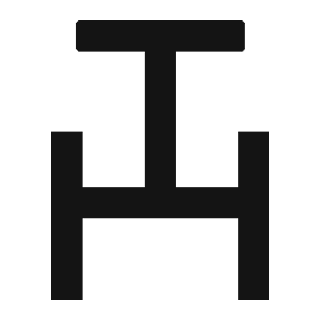 Triple tauThe emblem of the Royal ArchBRASS
Three T shapes joined at their feet, the emblem of Royal Arch masonry. It is read as Templum Hierosolymae, the Temple of Jerusalem, or as a sign of the Trinity.
WHERE IT IS SEEN Royal Arch chapters, their jewels and banners, often set inside a triangle within a circle.
The Royal Arch is told as the story of the rebuilding of the Temple after the exile in Babylon, and of what was found beneath its ruins.
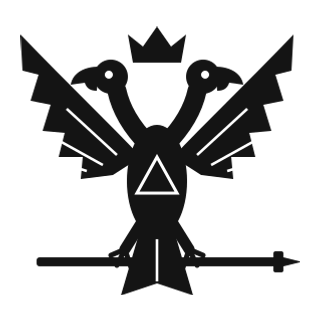 Double-headed eagleEagle of the Scottish Rite
An eagle with two heads, one looking east and one west: an emblem of empire in Byzantium and the Holy Roman Empire, taken by the Scottish Rite for its highest degrees as a sign of the two sides of all things joined in one.
WHERE IT IS SEEN The Scottish Rite, where the eagle of the thirty-third degree is crowned and holds a sword, with the motto Deus meumque jus, “God and my right”; the arms of Russia, Serbia and Albania.
The eagle entered Freemasonry with the French high degrees of the 1750s and 1760s. The first Supreme Council of the Scottish Rite was founded at Charleston, South Carolina, in 1801.
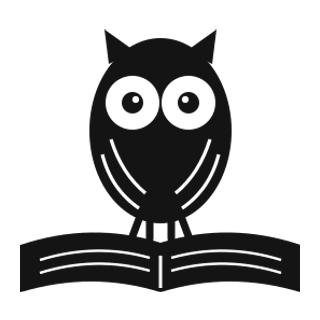 Owl of MinervaThe Bavarian Illuminati
The owl of Minerva, Roman goddess of wisdom, perched on an open book: the emblem of the Bavarian Illuminati, a secret society of the Enlightenment founded in Ingolstadt on 1 May 1776 by the law professor Adam Weishaupt.
WHERE IT IS SEEN The insignia of the Minervals, the first grade of the order; its members took classical names, Weishaupt himself “Spartacus”.
The elector of Bavaria banned secret societies in 1784 and 1785, and the order was gone within a few years. Writers such as Augustin Barruel and John Robison then blamed it for the French Revolution, and the “Illuminati” of later conspiracy theories, with their pyramids and eyes, grew from there; the real order never used them.
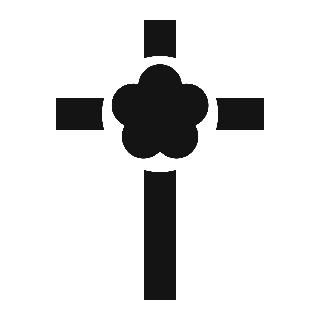 Rose crossRosicrucianism, the Rose CroixBRASS
A rose at the centre of a cross: the soul blossoming on the cross of the body, or the Resurrection. It is the sign of the Rosicrucians and of the Rose Croix, the eighteenth degree of the Scottish Rite.
WHERE IT IS SEEN Rosicrucian societies, the Rose Croix chapters of the Scottish Rite, and the seal of Martin Luther, which some have linked with it.
The Rosicrucians announced themselves in three anonymous pamphlets, printed in Germany in 1614, 1615 and 1616, which described a secret brotherhood that may never have existed.
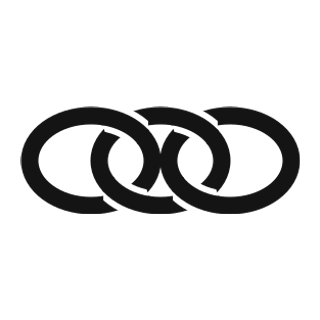 Three linksFriendship, love and truthBRASS
Three links of a chain, often with the letters F, L and T: friendship, love and truth, the emblem of the Odd Fellows.
WHERE IT IS SEEN Odd Fellows halls, which still stand in many American and British towns, their gravestones and their regalia.
The Odd Fellows began in eighteenth-century England as clubs of working men who paid in to help one another in sickness and death; the American order was founded in Baltimore in 1819.
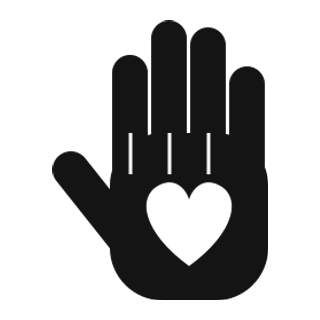 Heart in handCharity from the heart
An open hand with a heart in its palm: what the hand gives is given from the heart. It is one of the emblems of the Odd Fellows, and its members are taught to hold out help without being asked.
WHERE IT IS SEEN Odd Fellows gravestones and regalia; American folk art and the gift drawings of the Shakers.
The emblem is easy to mistake for a sign of friendship in general, and it is often carved on gravestones for that reason too.
No emblem matches. Try the order (“Templar”), the tool (“level”) or the society (“Illuminati”).
Written in our own words from public reference works; each entry lists its sources. Masonic meanings differ from one jurisdiction and ritual to another, and we give the readings most widely published, not the teaching of any lodge. We are not a Masonic body. The emblems of modern organisations such as the Shriners, the Knights of Columbus and the Order of the Eastern Star are registered marks, and are not shown here; we make them only for the organisations themselves, with their written permission.
The drawings are our own. Where an emblem is drawn from the motif of one of our brass signs, the sign is linked from its entry.