
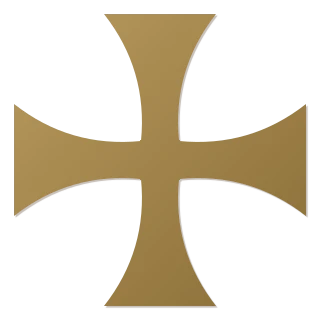
Templar cross
cross pattée, the Knights Templar
Arms that widen toward their ends. The Templars wore it in red on white from 1147, when Pope Eugenius III granted it to them; the Masonic Knights Templar of the York Rite wear it today.
The crosses of the crusading orders and the emblems of the lodge, from the Templar cross to the square and compasses. Here are twenty-three of them, each drawn for our solid-brass round frame and made to order, alone or for every member of a lodge, chapter or commandery, with the brooches, coins and clips in our Etsy shop.
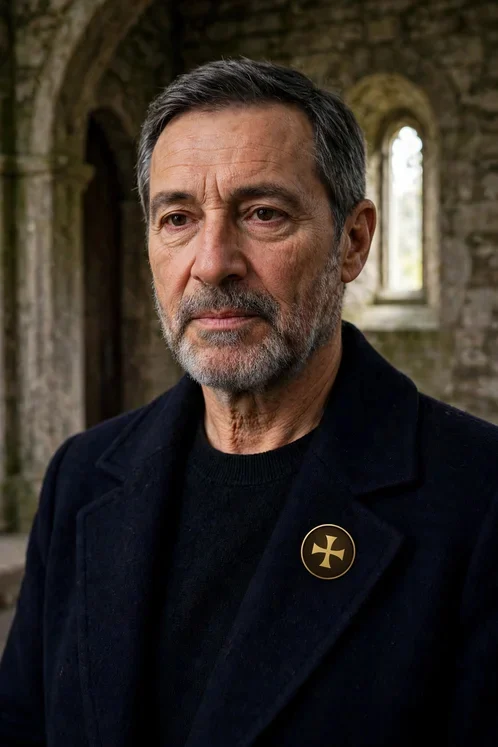
The cross the Templars wore on their mantles, now on a winter coat: worn by members of the Masonic Knights Templar to meetings and installations, and by anyone who walks the old chapels of the crusading orders. In solid brass it lasts as long as the membership.
Arms that widen toward their ends. The Templars wore it in red on white from 1147, when Pope Eugenius III granted it to them; the Masonic Knights Templar of the York Rite wear it today.
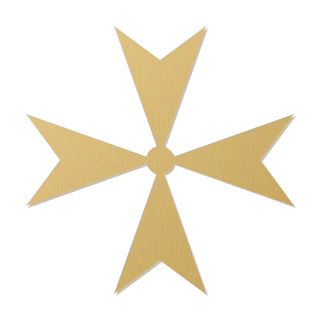
Four arrowhead arms with eight points, often read as the eight beatitudes. The Hospitallers, founded to nurse pilgrims in Jerusalem, held Rhodes and then Malta, which gave the cross its name; it lives on in the Order of Malta, St John Ambulance and many firefighters’ badges.
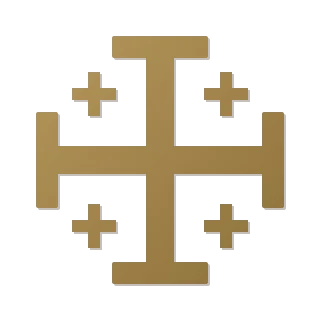
A great cross with crossbars at its ends and a small cross in each quarter: the arms of the Kingdom of Jerusalem in the thirteenth century. The five crosses are often read as the five wounds of Christ, and it is the emblem of the Order of the Holy Sepulchre today.
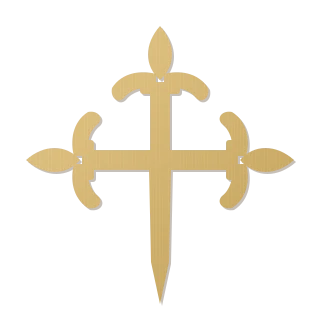
A cross whose lower arm is a sword blade and whose other arms end in lilies: the sword of St James, patron of Spain. The order was founded to guard pilgrims on the road to Compostela, and in Las Meninas Velázquez wears its red cross on his chest.
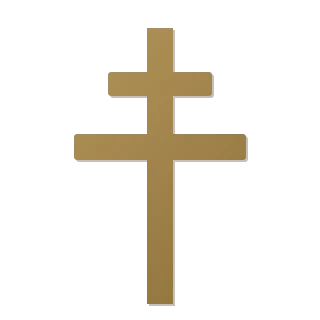
The upper bar stands for the inscription set over Christ’s head. The cross came to the Dukes of Anjou and Lorraine with a relic of the True Cross, and in 1940 Charles de Gaulle made it the emblem of the Free French.
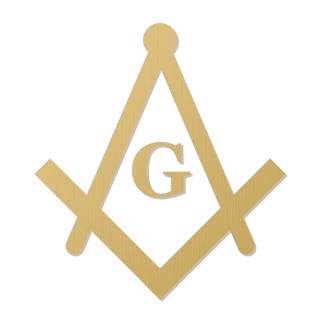
The square to keep one’s actions true, the compasses to keep one’s desires within bounds. The G between them is read as God, the Great Architect of the Universe, and as Geometry.
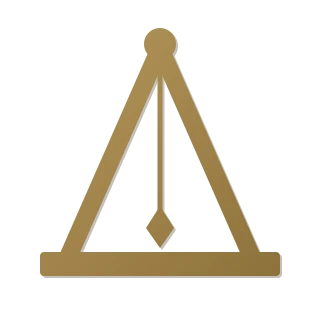
A frame with a plumb line, used to lay a course of stone true. In the lodge it stands for equality, for all members meet on the level, and it is the jewel worn by the Senior Warden.
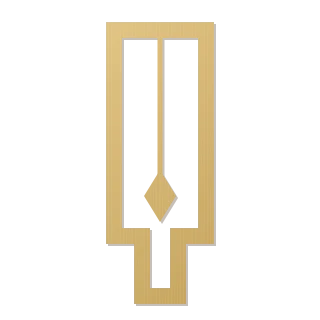
A board with a weighted line, for raising a wall upright. It teaches walking uprightly in life; it is the jewel of the Junior Warden, as the square is the jewel of the Master.
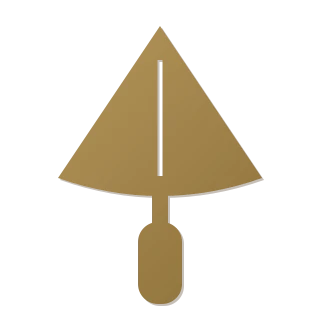
Used to spread the mortar that binds stones into one wall, it stands for the brotherly love that binds members into one company. In American lodges it is the working tool of the Master Mason.
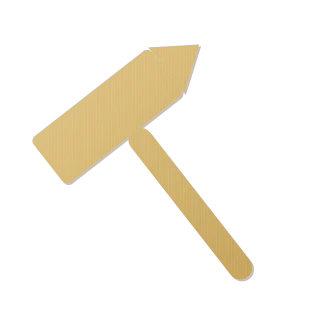
The stonemason’s hammer for knocking the rough corners off a stone. It reminds the new member to shape his own character, and in the Master’s hand it keeps order in the lodge.
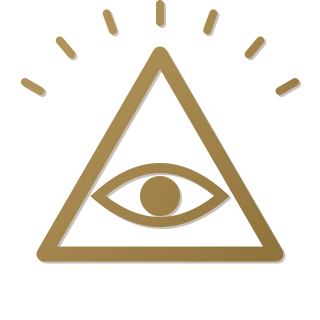
An eye in a triangle with rays of light: the watchfulness of the Great Architect over every thought and deed. It joined Masonic imagery in the late eighteenth century; as the Eye of Providence it is also on the Great Seal of the United States.
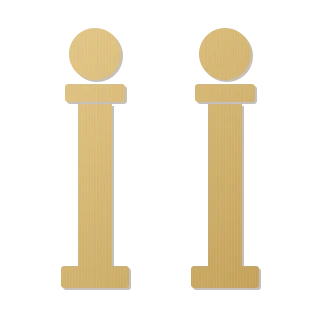
The bronze pillars at the porch of Solomon’s Temple: “he set up the right pillar, and called the name thereof Jachin: and he set up the left pillar, and called the name thereof Boaz” (1 Kings 7:21). Every lodge room recalls them, often topped with globes.
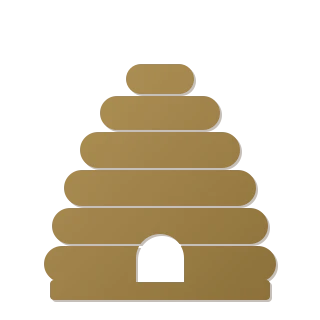
Every bee working for the good of the hive: industry and cooperation. It is an emblem of the Master Mason’s degree in American lodges, and the state emblem of Utah, where it stands for the same virtue.
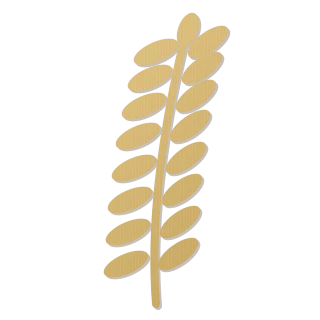
In the legend of Hiram Abiff, architect of Solomon’s Temple, a sprig of acacia marked his grave. It stands for the immortality of the soul, and a sprig is still dropped into the grave at Masonic funerals.
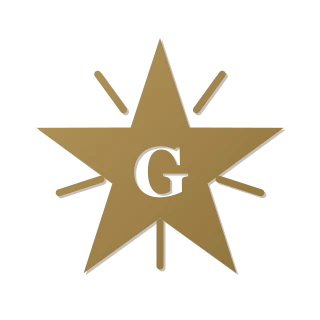
A five-pointed star with rays, often with a G at its heart, set at the centre of the lodge floor. It has been read as divine providence, as the star that led the wise men, and as the sun that lights the earth.
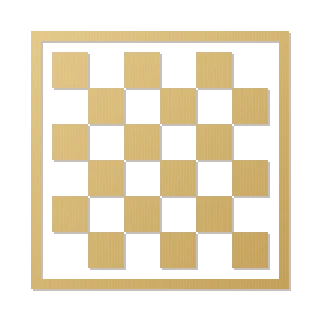
The black and white floor of the lodge, for the light and dark, joy and sorrow that make up every life. It is said to recall the floor of Solomon’s Temple.
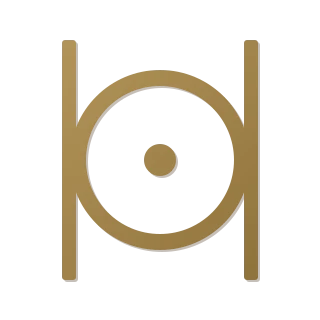
A point with a circle drawn around it: the individual and the bounds of his conduct. The two lines are the two Saints John, the Baptist and the Evangelist, patrons of the lodge, whose feasts fall near the summer and winter solstices.
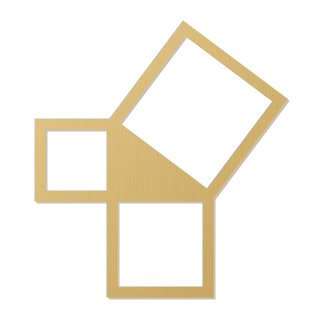
The square on the longest side of a right triangle equals the squares on the other two: proposition 47 of Euclid’s first book. A 3-4-5 triangle lets a builder set out a true right angle, and in English lodges it hangs from the jewel of a Past Master.
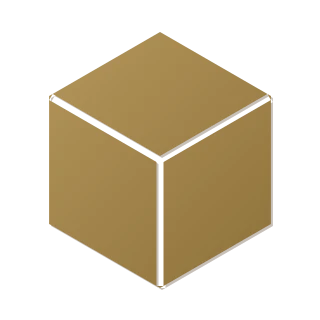
A stone cut square and true, ready for the wall. Beside the rough ashlar, the stone as it leaves the quarry, it stands for the member shaped by learning and a good life.
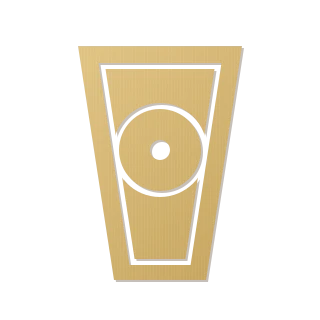
The wedge-shaped stone that locks an arch. In the Mark degree it is “the stone which the builders refused,” become “the head stone of the corner” (Psalm 118:22); a member’s keystone carries a ring of letters and his own mark at the centre.
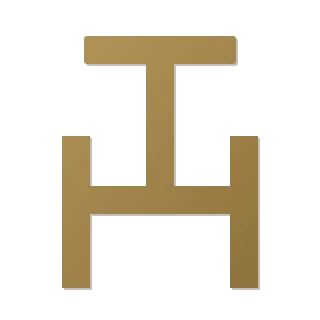
Three tau crosses joined as one, set within a triangle and circle on the jewel of a Royal Arch companion. It has been read as the Temple of Jerusalem, as a key to treasure, and as a sign of the Trinity.
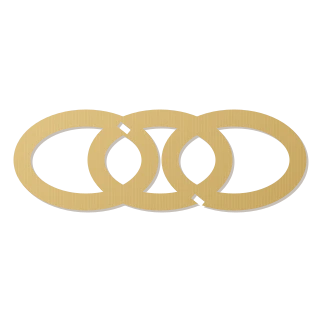
Three links of a chain for friendship, love and truth: the emblem of the Odd Fellows, one of the great friendly societies, which paid sick pay and funerals for its members long before the welfare state.
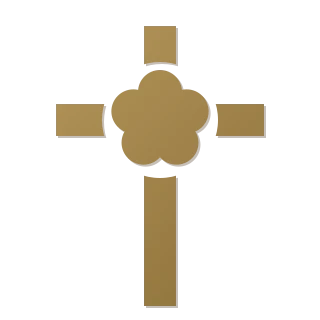
A rose blooming at the crossing of a cross, the sign of the brotherhood announced in three anonymous pamphlets of 1614 to 1616. It passed into the Rose Croix degree of the Scottish Rite and into many later orders.
Every emblem above can be made in solid brass, in S Ø20, M Ø25 or L Ø30 and either finish, one at a time or one for every member, with your lodge’s name and number on the card.
ORDER AN EMBLEM IN BRASSSome emblems are figures too fine for a brooch, and some belong to others. We list them here.
The Templar cross and the square and compasses, ready to order from our Etsy shop.
The red cross the Pope granted the Templars in 1147, worn on their white mantles from Jerusalem to Paris.
The square and compasses and the all-seeing eye, the emblems of the lodge since the eighteenth century.
The crowned crosses of the royal orders of the nineteenth century, given to the deserving.
The Knights Templar were monks who fought as knights, sworn to poverty, chastity and obedience. Founded in Jerusalem around 1119 to guard pilgrims, they built castles in the Holy Land and a network of houses across Europe that worked almost as a bank. After Acre fell in 1291 their purpose went with it; in 1307 King Philip IV had the Templars of France arrested, and in 1312 the Pope dissolved the order.
Freemasonry grew out of the lodges of working stonemasons and took its emblems from their tools: the square, the compasses, the level and the plumb rule. The first Grand Lodge met in London in 1717. Later in the eighteenth century Masonic orders of knighthood took up the Templar name and cross as a tribute rather than an unbroken line; the Knights Templar of the York Rite are the best known. That is why the same red cross appears in both halves of this collection.
Your lodge, chapter or commandery emblem, with its number and founding year, carved in solid brass: a brooch for every member, a coin for an anniversary, or a gift for an installation. We redraw your artwork for brass, send renders in both finishes and a sample, then make the order.