SERIES 02 · SACRED

Christian symbols in the kamon circle, and signs of other faiths

Ten symbols the Church has carried down the centuries and four scripture verses, carved in the same solid-brass round frame as our family crests, for baptisms, confirmations, ordinations and everyday wear. Beside them, eight signs held sacred in other traditions, from the lotus to Thor’s hammer, drawn for the same frame and made to order.

WORN · 身に着ける
Faith at the lapel

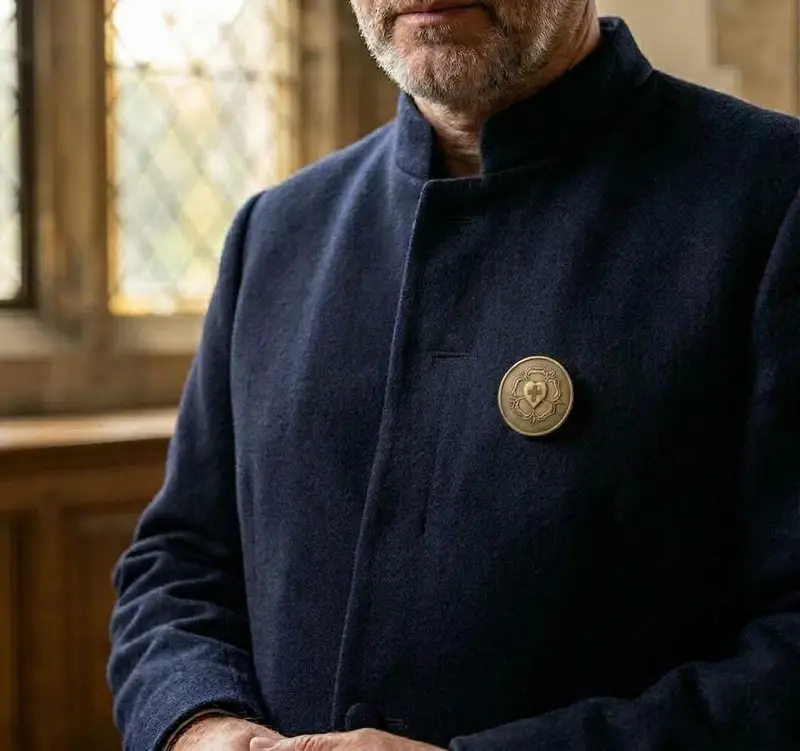
Small enough for every day, clear enough to be recognised. Worn on a winter coat to church, to work, or as a gift that marks a baptism or confirmation.

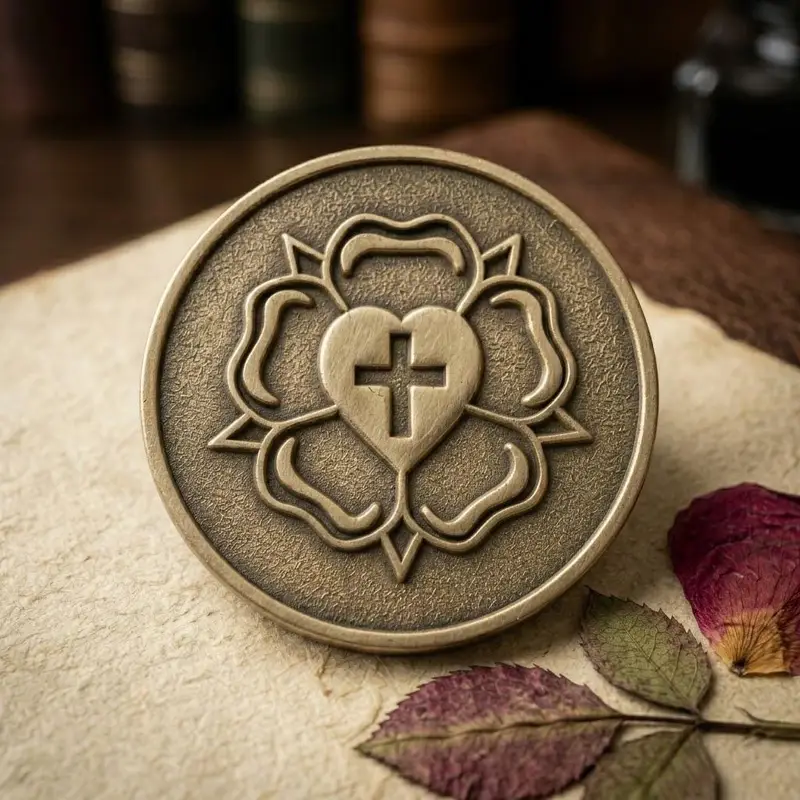
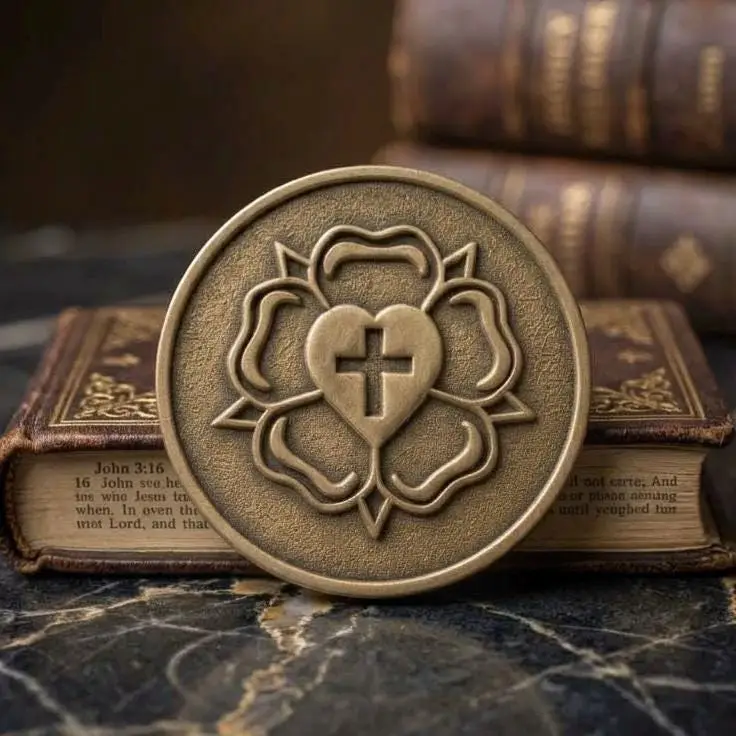
Luther Rose
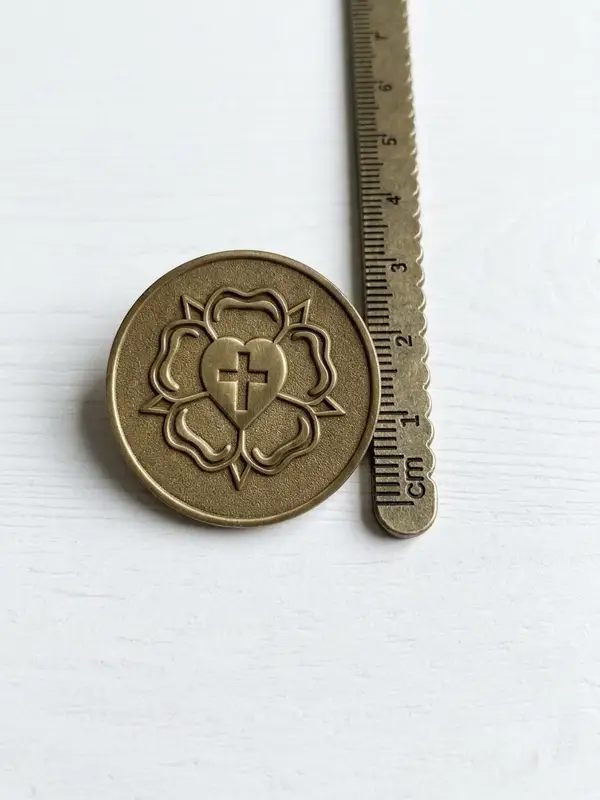
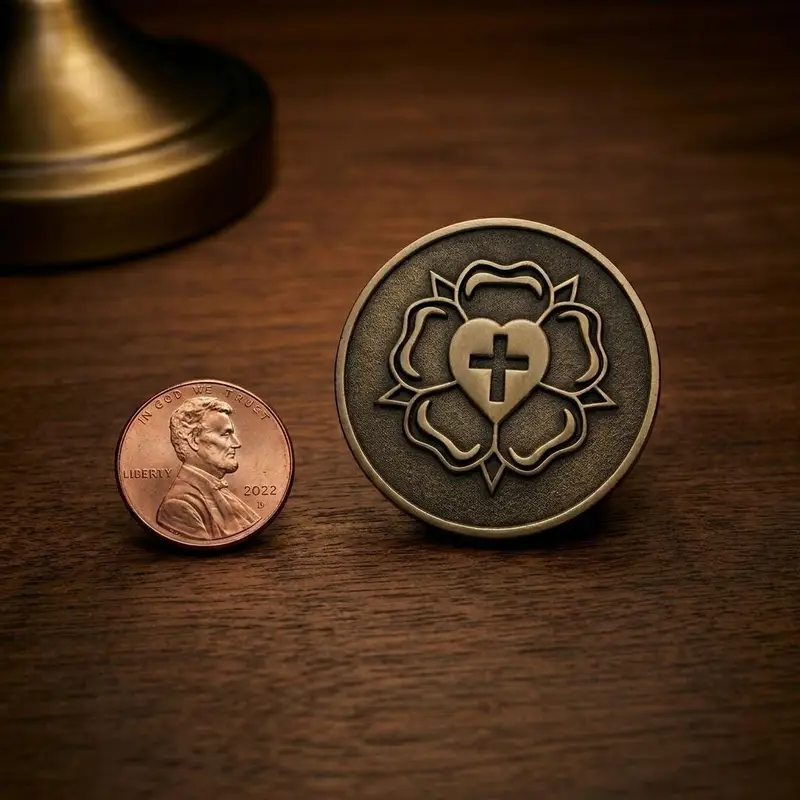
M · Ø25 · F2 ANTIQUE
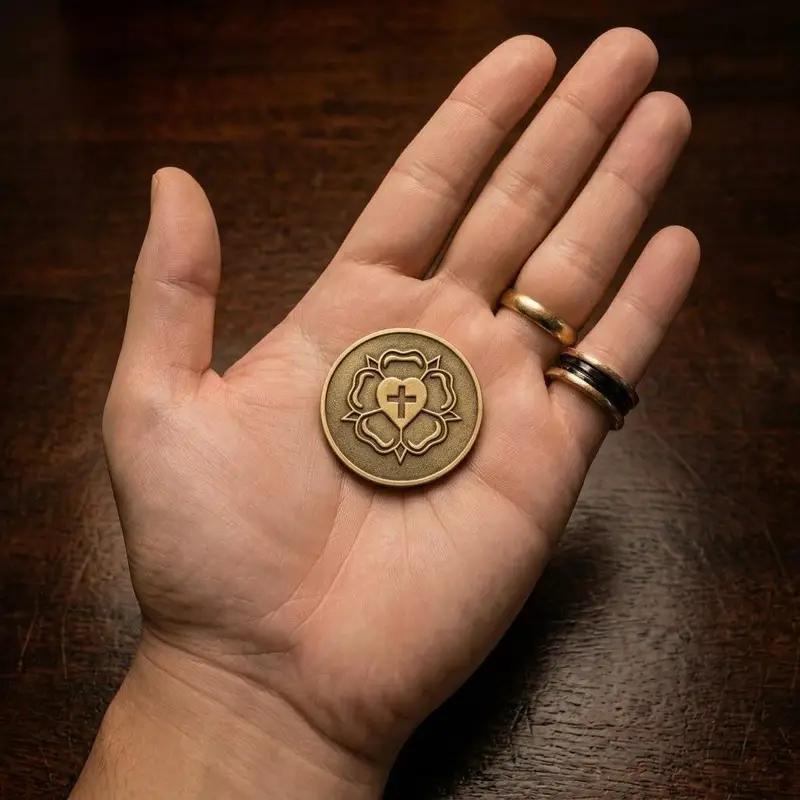
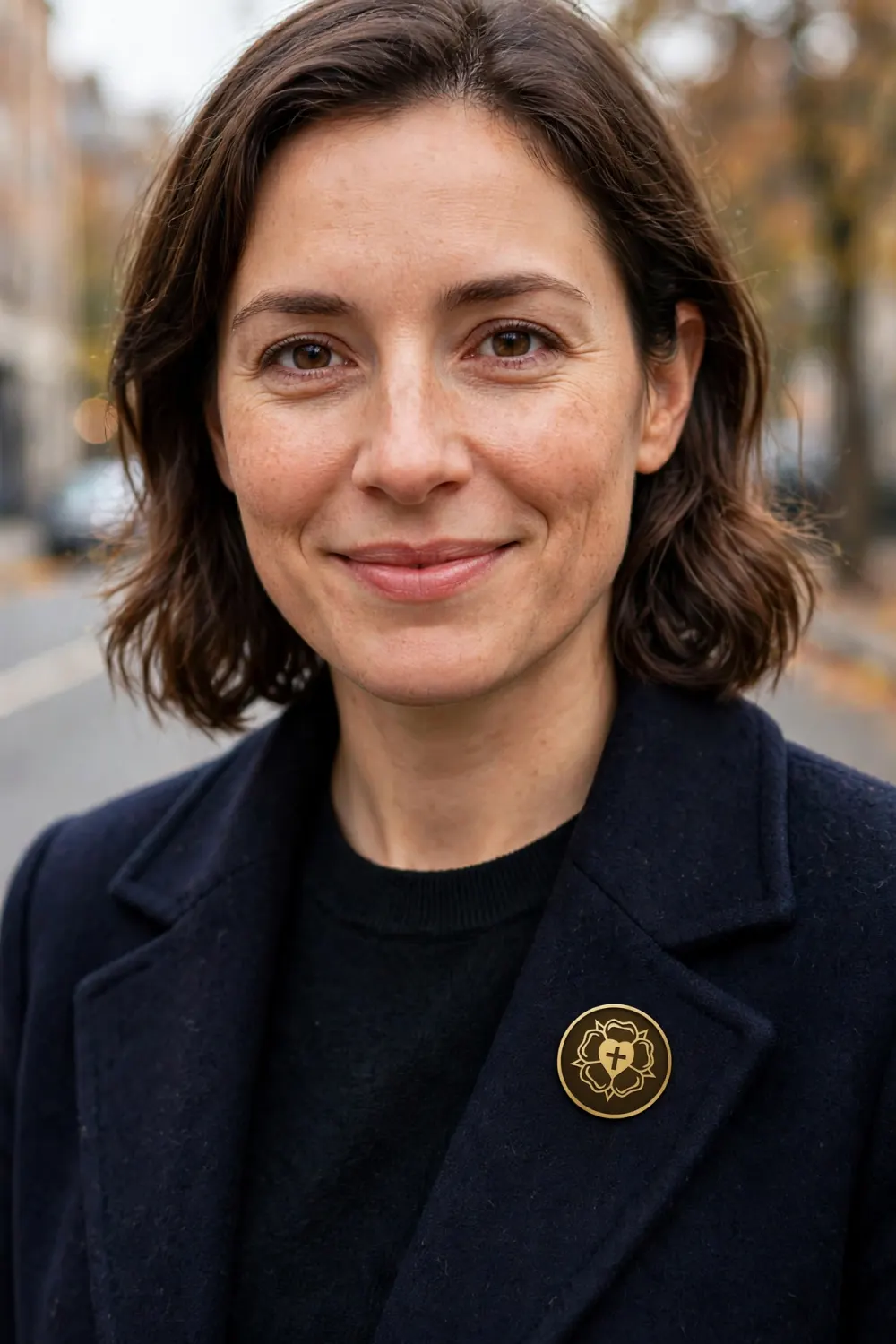
Luther rose brass brooch worn on a coat lapel
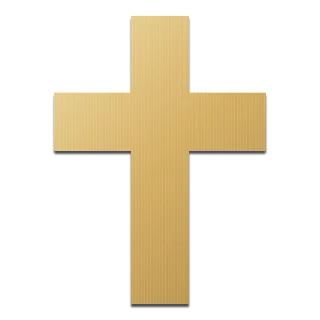
Empty Latin Cross
S · M · L

01Empty Latin Cross

Shared across Christian traditions
A plain cross with no figure upon it. For many Protestant churches the empty cross is a sign of the Resurrection — the work finished, the tomb empty.
Catholic and Orthodox churches more often show the crucifix, with Christ upon it, but the plain cross is the one shape every tradition shares. That makes it the simplest gift for a baptism or a confirmation, whatever the family’s church.
A quiet lapel pin that says what it means without a word.
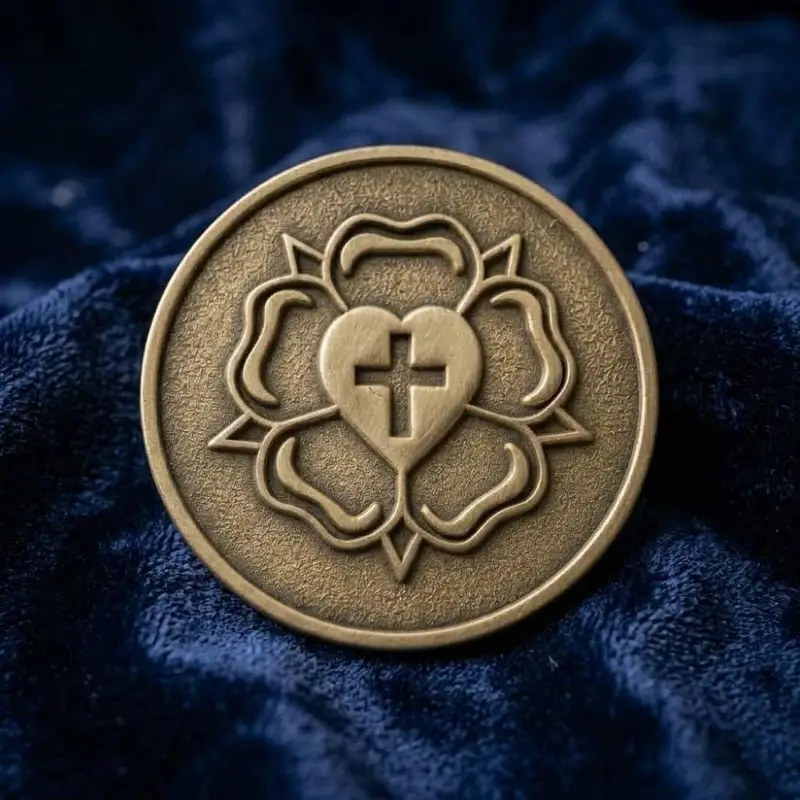
02Luther Rose

Lutheran
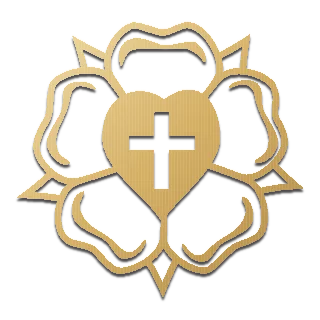
Designed for Martin Luther around 1530: a black cross in a red heart, set on a white rose, on a blue field, ringed in gold.
Lutheran churches around the world still use the rose as their emblem, and it is worn on Reformation Day, 31 October. In brass it is carved in a single colour: the cross, heart, rose and ring are read by their shapes.
In a 1530 letter Luther explained each part — faith in the crucified Christ, joy and peace, the hope of heaven, and a ring of gold for a blessing without end.
Anchor of Hope
S · M · L

03Anchor of Hope

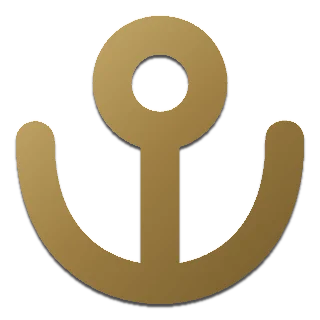
Shared · Hebrews 6:19
“Which hope we have as an anchor of the soul, both sure and stedfast.”
The anchor’s crossbar hides a cross, which is why it served as a quiet sign of faith. Today it is chosen for hope in hard times, and by sailors, naval families and churches near the sea.
Carved on the walls of the Roman catacombs, the anchor let early Christians mark the cross in plain sight during years of persecution.
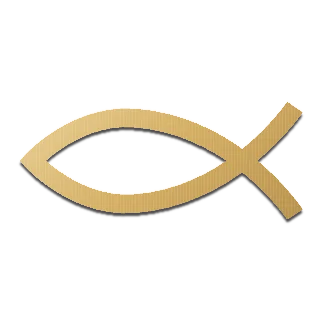
Ichthys
S · M · L

04Ichthys

Shared · Evangelical
Two arcs forming a fish. The Greek ΙΧΘΥΣ spells “Jesus Christ, Son of God, Saviour.”
After centuries as a mark in the catacombs, the fish returned in the 1970s as one of the most familiar signs of evangelical faith. Its single unbroken line suits brass well.
Tradition says one believer would draw a single arc in the dust; a stranger who completed the fish was a brother or sister in faith.
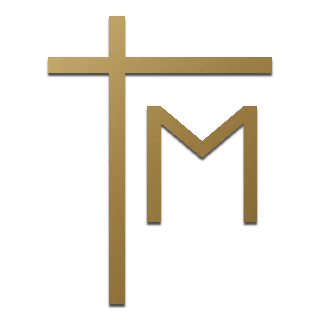
Marian Cross
S · M · L

05Marian Cross

Catholic
A cross with the letter M beneath its right arm, recalling Mary standing at the foot of the cross.
The scene is John 19:25–27, where Jesus entrusts his mother to the beloved disciple. A cross above an M is also on the back of the Miraculous Medal of 1830, so it is often given at a first communion or confirmation in Catholic families.
Pope John Paul II placed this cross on his coat of arms with the motto “Totus Tuus” — “Totally yours.”
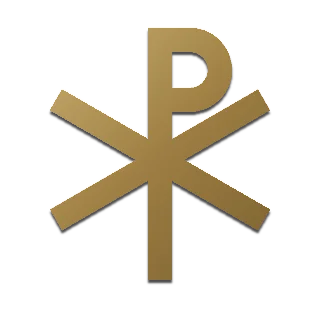
Chi-Rho
S · M · L

06Chi-Rho

Early Church · Anglican · Lutheran
The Greek letters Χ and Ρ, the first two of “Christos,” laid over one another.
It still appears on altar cloths, vestments and church doors, especially at Christmas and Easter; the X in “Xmas” is the same Greek Chi. A sign of Christ himself, not of any one tradition.
Before the Battle of the Milvian Bridge in 312, Emperor Constantine is said to have had the sign painted on his soldiers’ shields.
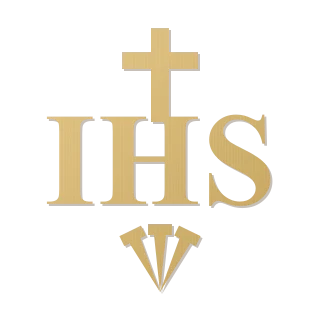
IHS Christogram
MADE TO ORDER

07IHS Christogram

Catholic · Jesuit · Anglican
The first three letters of the name of Jesus in Greek, ΙΗΣΟΥΣ, written in Latin letters: here with a cross rising from the H and three nails beneath, as the Jesuits carry it.
The letters are an abbreviation, not initials, though they were later read as Iesus Hominum Salvator, “Jesus, Saviour of mankind.” Ignatius of Loyola put them on the seal of the Society of Jesus, founded in 1540, and they are carved on altars, chalices and church doors; a natural gift from a Jesuit school or parish.
In the fifteenth century the Franciscan preacher Bernardino of Siena held up a board painted with IHS in a golden sun, and the monogram spread across Italy.
Trinity Knot
MADE TO ORDER

08Trinity Knot

Celtic Christianity · Shared
The triquetra: three pointed loops drawn as one unbroken line, passing over and under itself.
Three loops that are one line became a picture of the Trinity: three Persons, one God. Since the Celtic revival of the nineteenth century it has been a favourite in Ireland and Scotland, and it is often chosen for weddings and by families with Irish roots.
The knot is older than its Christian reading and appears in Germanic and Celtic art before the conversion; the monks who made the Book of Kells, around 800, wove it into its pages.
Dove of the Holy Spirit
MADE TO ORDER

09Dove of the Holy Spirit

Shared · Confirmation · Pentecost
A dove descending, head down and wings raised, as at the baptism of Jesus in the Jordan.
All four Gospels tell of the Spirit coming down like a dove at the Jordan, and ever since the dove has stood for the Holy Spirit: it is the sign of confirmation and of Pentecost, carved over fonts and painted above altars. With an olive branch in its beak it is a different dove, Noah’s, and a sign of peace.
“And the Holy Ghost descended in a bodily shape like a dove upon him” (Luke 3:22).
Alpha and Omega
MADE TO ORDER

10Alpha and Omega

Shared · Revelation 22:13
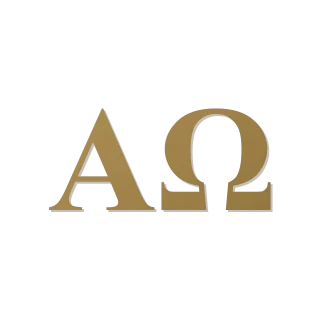
“I am Alpha and Omega, the beginning and the end, the first and the last.”
Alpha and omega are the first and last letters of the Greek alphabet. In the Book of Revelation God, and then Christ, take the title for themselves: the beginning and the end of all things. It is chosen for memorials and funerals, and for an Easter baptism, when the new candle is lit.
In the catacombs the two letters hang from the arms of the Chi-Rho, and at the Easter Vigil the priest still traces them on the new Paschal candle, beside the cross.

THE MEANING OF EACH SYMBOL →

SCRIPTURE · TEXT ONLY
A verse at the lapel

No image, only the book and verse, carved in raised letters inside the same brass circle. A plain reference for anyone who knows it by heart.

Quoted from public-domain or freely quotable translations (KJV, ESV). On the S size, only the chapter and verse are carved.
John 3:16
“For God so loved the world”
KJV

Jesus to Nicodemus at night: the verse often called the Gospel in miniature.

Philippians 4:13
“I can do all things through Christ”
KJV

Paul, writing from prison, on being content in plenty and in want.

Jeremiah 29:11
“For I know the plans I have for you”
ESV

A letter to the exiles in Babylon: a promise of a future and a hope.

Isaiah 40:31
“They shall mount up with wings as eagles”
KJV

Strength renewed for those who wait on the Lord: a favourite for runners and the weary.

IN THE ETSY SHOP · 販売中

More Christian pieces

Beyond the brass crest series above: saints, angels and crosses as enamel pins, challenge coins, necklaces and more, each with the story of its symbol. They are sold through our Etsy shop; prices are list prices in US dollars, and the Etsy listing always has the current price and stock.

Crosses and scripture

The woven cross of St Brigid, the armour of God from Ephesians 6, and the Luther rose in the colours Luther gave it.

BROWSE THE WHOLE ETSY SHOP ↗

Signs of other faiths, in the same brass frame 諸宗の印

Sacred signs are not only Christian. These eight come from Buddhism and Hinduism, Taoism, Judaism and Islam, the shared amulets of the Middle East and the old faith of the North, each drawn for our solid-brass round frame and made to order. Each is held sacred by someone, so we set down what it means to them, as plainly as we can.

Lotus
MADE TO ORDER

11Lotus

Buddhism · Hinduism
A flower that roots in the mud and opens clean above the water.
In Buddhism it stands for the mind that rises through suffering to awakening without being stained by it; the Buddha sits on an open lotus, and in Japan the lotus pedestal, rendai, carries almost every temple image. In Hinduism the lotus is the seat of Lakshmi and of Brahma.
The Lotus Sutra, one of the most loved scriptures of East Asian Buddhism, takes its name from the flower.
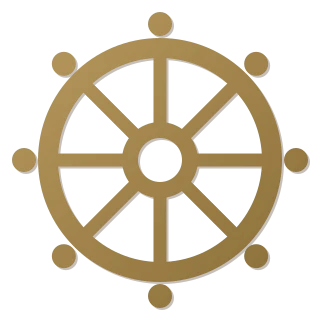
Dharma Wheel
MADE TO ORDER

12Dharma Wheel

Buddhism
The dharmachakra, the wheel of the teaching, its eight spokes the Noble Eightfold Path.
The Buddha’s first sermon, in the Deer Park near Sarnath, is called the first turning of the wheel of the Dharma. Before artists showed the Buddha in human form, they pictured him by signs: this wheel, a footprint, an empty seat.
The emperor Ashoka set wheels on stone pillars across India in the third century BC; one of them, the Ashoka Chakra, is at the centre of India’s flag today.
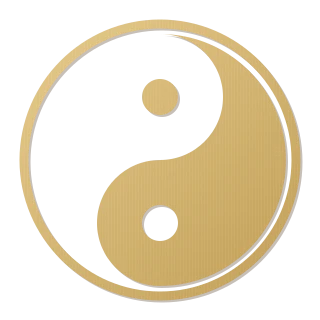
Yin and Yang
MADE TO ORDER

13Yin and Yang

Taoism · Chinese thought
The taijitu: dark and light curled into one circle, each holding a seed of the other.
Yin and yang are not good and evil but the two sides of every change: shade and sun, rest and motion, receiving and giving. Taoism teaches living in step with their turning rather than choosing one, and the sign is worn by many who practise tai chi or meditation.
The idea is ancient, set out in the Book of Changes; the circle we know became the usual way of drawing it many centuries later.
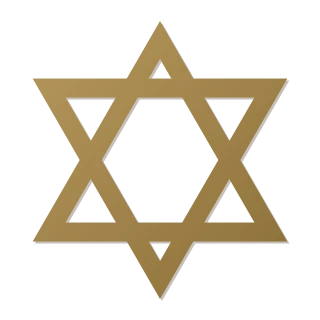
Star of David
MADE TO ORDER

14Star of David

Judaism
The Magen David, “shield of David”: two triangles laid over one another.
Used on synagogues and in Hebrew books for centuries, it was taken up by the Zionist movement in 1897 and has stood on the flag of Israel since 1948. It is a favourite gift for a bar or bat mitzvah.
In earlier centuries the six-pointed star also decorated churches and mosques; as the sign of the Jewish people it is relatively young, and no less loved for it.
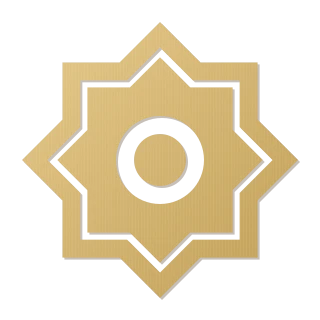
Rub el Hizb
MADE TO ORDER

15Rub el Hizb

Islam
An eight-pointed star of two squares, with a circle at its heart.
Islam has no official symbol, and many Muslims prefer none; its art speaks through geometry and calligraphy instead. This star marks the quarters of each hizb, the sixty sections into which the Qur’an is divided for recitation.
The same star runs through Islamic tilework and woodwork from Andalusia to Central Asia, a pattern without beginning or end.
Hamsa
MADE TO ORDER

16Hamsa

Islam · Judaism
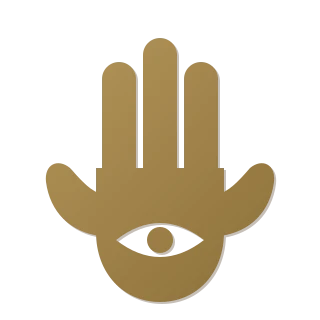
An open right hand, fingers together, with an eye in the palm.
An amulet against the evil eye, the harm that envy is believed to bring, and older than the faiths that keep it. Muslim families call it the Hand of Fatima, Jewish families the Hand of Miriam; it hangs by front doors and over cradles from Morocco to Israel.
Hamsa is Arabic for “five,” as hamesh is in Hebrew: the five fingers of the hand.
Om
MADE TO ORDER

17Om

Hinduism · Buddhism · Jainism
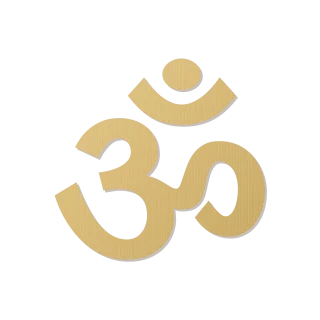
The sacred syllable Om, or Aum, written in Devanagari script.
Om is chanted at the beginning and end of prayers, readings and meditation; the Upanishads call it the sound of all that is. It is sacred in Buddhism and Jainism too, and some Hindus prefer it not to be worn below the waist or taken into unclean places.
The Mandukya Upanishad reads its three sounds, A, U and M, as waking, dreaming and deep sleep, and the silence after them as the fourth state beyond all three.
Thor’s Hammer
MADE TO ORDER

18Thor’s Hammer

Norse · Heathenry
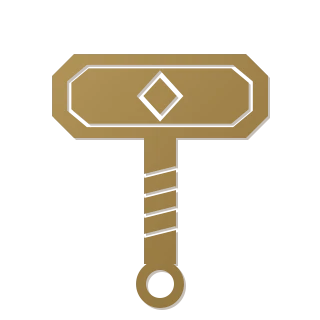
Mjölnir, the hammer of the thunder god Thor, as it is drawn today.
Thor guarded gods and people against the giants, and small hammer amulets were worn across Viking Age Scandinavia, most from the tenth century, the same years the cross was arriving in the North. Today it is the emblem of the revived Norse faith, Heathenry or Ásatrú.
A soapstone mould found at Trendgården in Denmark has room to cast crosses and hammers side by side: one smith, serving both faiths.

ORDER ONE IN BRASSFORTY-SIX SIGNS IN THE SACRED ATLAS →HOW CUSTOM ORDERS WORK →

IN THE ETSY SHOP · 販売中

Pins and pendants from other traditions

Buddhism, Zen and the Tao

The lotus that rises clean from the mud, and the two halves of yin and yang, each holding a seed of the other.

Islam and the Middle East

The mosque under the night sky of Ramadan, and the open hand of the hamsa, kept by Muslim and Jewish families alike.

The old faith of the North

Thor’s hammer, Odin’s two ravens, the wolf Fenrir, and the helmet of the Sutton Hoo ship burial.

FOR THE OCCASION · 贈り物

Gifts for the milestones of faith

Baptism and christening.
A brooch that can be kept until the child is old enough to wear it, with the meaning of the symbol on the card in the box.
First communion and confirmation.
The Marian cross for Catholic families, the Luther rose for Lutheran confirmands, the plain cross for any tradition.
Ordination and church anniversaries.
Your church’s own emblem, or one of these symbols, made for a whole congregation through a group order.
Every day.
At Ø25 mm it sits on a coat lapel or a collar without shouting, and brass darkens gently with wear.

Questions about the Sacred Series

Which traditions are these for?
The brass symbols are Christian, and made for every church: the plain cross, the anchor, the ichthys, the Chi-Rho, the dove, the Trinity knot and the Alpha and Omega are shared by all traditions; the Luther rose is Lutheran, the Marian cross Catholic and the IHS above all Catholic and Jesuit. Further down are signs of other faiths, from Buddhism and Taoism to Islam, the hamsa and the Norse tradition, each with what it means to those who hold it sacred.
Can you make our church’s own emblem?
Yes. Send us the emblem with written permission to reproduce it, and we redraw it for the round brass frame, send renders and a sample, then make the order. See Custom & Wholesale.
Can you make a symbol from another faith in brass?
Often, yes: send us the symbol and tell us how it will be worn. Some traditions avoid images of the sacred, or the holy name, on jewellery, and we will say so if a design is better not made. See Custom & Wholesale.
Can I have a different Bible verse?
The four verses here are the ones we make as standard. For another verse, email us the reference and translation; short references fit best, and on the S size only the chapter and verse are carved.
Is the Luther rose in colour?
No. Like every crest we make, it is carved in a single colour of brass, with the motif raised in relief. The heart, cross, rose and ring read clearly by their shapes.
What sizes and finishes are there?
S Ø20 mm, M Ø25 mm and L Ø30 mm, in F1 Brushed Brass or F2 Antique Bronze. The Luther rose is made in M and L, so its detail stays clear. See Craft & Care.