



SERIES 01 · KAMON

Fifteen Japanese family crests

Each crest is named first by its motif. Where we mention a clan, it is a historical association — many families have shared the same crest over the centuries.

WORN · 身に着ける
Your family’s mark, every day

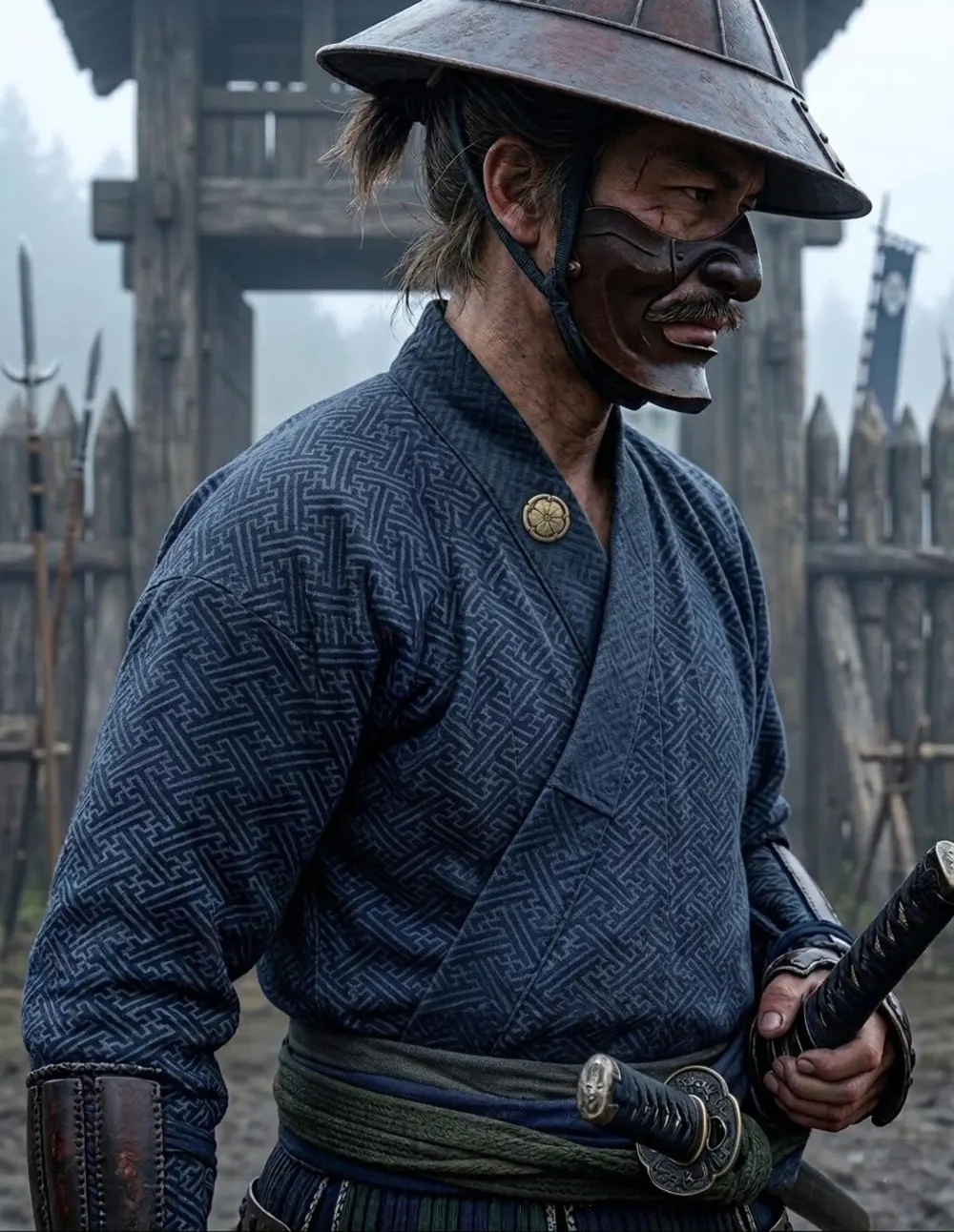
A crest that once marked a samurai’s sleeve or a family’s grave, worn now at the collar of a kimono, on a coat lapel or a linen jacket. It says where you come from without a word, and someone always asks.

Oda Mokkō
M · Ø25 · F1 BRUSHED
Oda mokkō brass kamon brooch worn at the collar of an indigo kimono
Maru ni Tachibana, F1 Brushed Brass
F1 BRUSHED
Maru ni Tachibana, F2 Antique Bronze
F2 ANTIQUE
SizesS · M · L
FinishF1 · F2

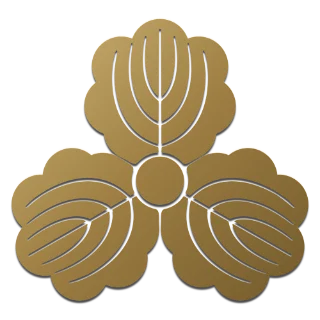
01Maru ni Tachibana

Tachibana orange in a circle
Associated with the Ii clan
IN THE ATLAS Tachibana 橘紋
ORIGIN
The tachibana is Japan’s native wild citrus. Its leaves stay green through winter, so it came to stand for long life and a household that never fades.
HISTORY
A tachibana tree has long stood to the right of the main hall of the Kyoto Imperial Palace, paired with a cherry on the left. As a crest it spread widely among samurai families, the Ii of Hikone among them.
A STORY · 物語
The oldest chronicles tell of Tajimamori, sent across the sea to find the “fruit of eternal fragrance.” He returned after ten years with tachibana — only to learn the emperor who sent him had died. He wept at the tomb until he, too, passed away.
Oda Mokkō, F1 Brushed Brass
F1 BRUSHED
Oda Mokkō, F2 Antique Bronze
F2 ANTIQUE
SizesS · M · L
FinishF1 · F2

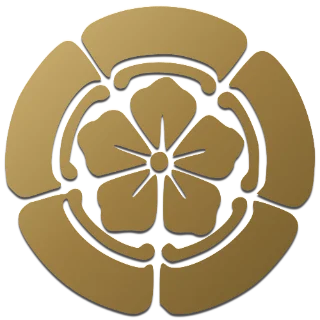
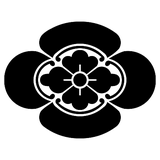
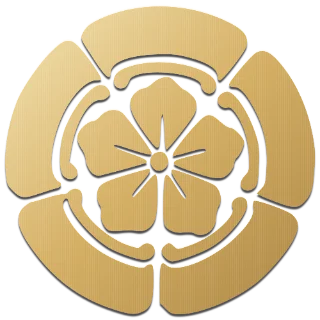
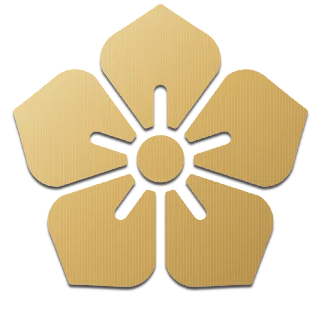
02Oda Mokkō

Oda-style mokkō
Associated with Oda Nobunaga
IN THE ATLAS Mokkō 木瓜紋
ORIGIN
Despite its name (“quince”), the mokkō shape most likely comes from a bird’s-nest pattern on Tang-dynasty Chinese silks — a symbol of a safe and prospering home.
HISTORY
The five-lobed version became the emblem of the Oda family of Owari. Under Oda Nobunaga it travelled across Japan on banners during the wars of unification in the late 1500s.
A STORY · 物語
Nobunaga is said to have used several crests in his lifetime, including the paulownia granted by the shogun. Yet it is the five-lobed mokkō that people still draw when they draw his name.
Mitsu Kashiwa, F1 Brushed Brass
F1 BRUSHED
Mitsu Kashiwa, F2 Antique Bronze
F2 ANTIQUE
SizesS · M · L
FinishF1 · F2

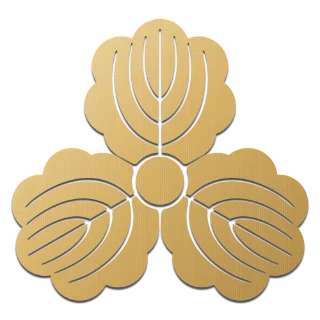
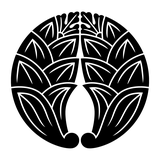
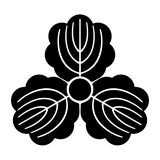
03Mitsu Kashiwa

Three oak leaves
Associated with shrine families and the Yamauchi clan
IN THE ATLAS Kashiwa 柏紋
ORIGIN
Kashiwa oak keeps its old leaves until the new buds open in spring. That habit made it a sign of a family line passing safely from one generation to the next.
HISTORY
In ancient Japan, offerings to the gods were served on oak leaves, which is why the crest is common among Shinto priestly families. It was also used by the Yamauchi, lords of Tosa.
A STORY · 物語
Every spring on Children’s Day, families still wrap rice cakes in kashiwa leaves — a wish that the household will continue, unbroken, like the oak.
Go-san no Kiri, F1 Brushed Brass
F1 BRUSHED
Go-san no Kiri, F2 Antique Bronze
F2 ANTIQUE
SizesS · M · L
FinishF1 · F2

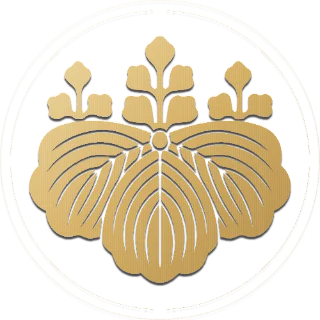
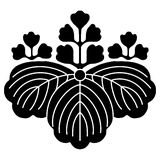
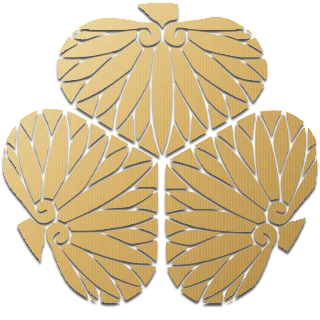
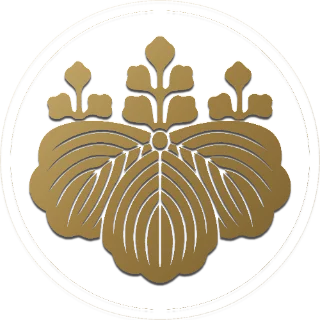
04Go-san no Kiri

Paulownia, five-three
Associated with the Toyotomi clan
IN THE ATLAS Kiri 桐紋
ORIGIN
Three paulownia leaves beneath three flower spikes of five, three and five blossoms. In Chinese legend the phoenix perches on no tree but the paulownia.
HISTORY
Long reserved for the imperial court, the crest was granted to a few great warriors — most famously Toyotomi Hideyoshi, who in turn gave it freely to his retainers. It became one of the most common crests in Japan.
A STORY · 物語
Hideyoshi rose from a foot soldier’s son to ruler of the realm. Receiving the paulownia crest marked that climb; sharing it with his own men was his way of passing the honour on.
Maru ni Mitsuba Aoi, F1 Brushed Brass
F1 BRUSHED
Maru ni Mitsuba Aoi, F2 Antique Bronze
F2 ANTIQUE
SizesS · M · L
FinishF1 · F2

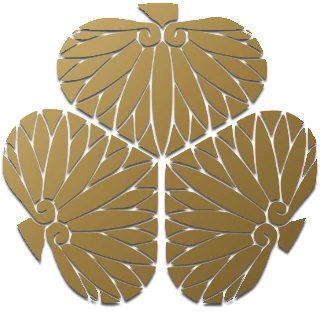
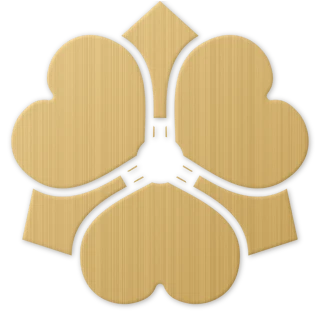
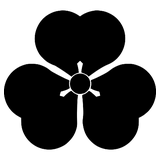
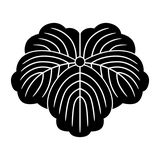
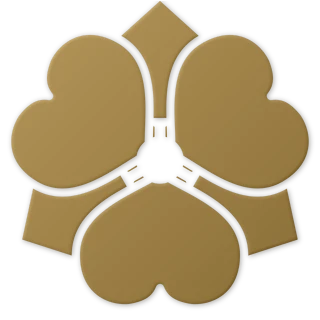
05Maru ni Mitsuba Aoi

Three hollyhock leaves in a circle
Associated with the Tokugawa clan
IN THE ATLAS Aoi 葵紋
ORIGIN
The aoi is a wild ginger whose heart-shaped leaves were sacred to the Kamo Shrines of Kyoto, still worn in their Aoi Festival every May.
HISTORY
The Tokugawa adopted three aoi leaves turned toward one another. During the Edo period (1603–1868) its use by other families was tightly restricted, making it one of the most recognised crests in Japanese history.
A STORY · 物語
In a long-running television drama, a retired lord travels in disguise; at the climax his companion lifts a small case bearing the aoi crest — and every wrongdoer drops to his knees.
Sakura, F1 Brushed Brass
F1 BRUSHED
Sakura, F2 Antique Bronze
F2 ANTIQUE
SizesS · M · L
FinishF1 · F2

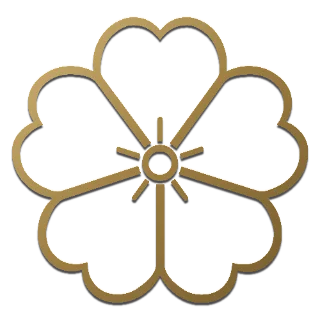
06Sakura

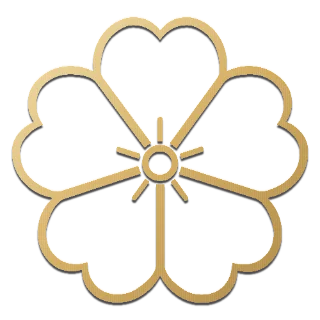
Cherry blossom
A traditional motif shared by many families
IN THE ATLAS Sakura 桜紋
ORIGIN
Five petals, each with a small notch. The cherry blossom belongs to no single clan — it has been worn by court nobles, samurai and townspeople alike.
HISTORY
Cherry viewing (hanami) began among the Heian court over a thousand years ago. The blossom became a symbol of beauty that does not last, and of meeting the moment fully.
A STORY · 物語
Every spring, friends and families still gather beneath the trees for a few short days. The crest carries the same wish: to notice what is beautiful while it is here.
Iga, F1 Brushed Brass
F1 BRUSHED
Iga, F2 Antique Bronze
F2 ANTIQUE
SizesM · L
FinishF1 · F2

07Iga

Genji wheel with paired arrows
Iga-inspired design
ORIGIN
A Genji wheel — the ox-cart wheel of Heian court nobility — with two arrows laid side by side across its centre: courtly grace joined to the warrior’s readiness.
HISTORY
Our design is inspired by Iga Province, the mountainous region near Kyoto remembered for its shinobi — independent warrior families skilled in scouting and covert operations.
A STORY · 物語
When Tokugawa Ieyasu was stranded after the Honnō-ji Incident in 1582, tradition holds that men of Iga guided him through the mountains to safety — a journey still called the “Crossing of Iga.”
Akechi Kikyō, F1 Brushed Brass
F1 BRUSHED
Akechi Kikyō, F2 Antique Bronze
F2 ANTIQUE
SizesS · M · L
FinishF1 · F2

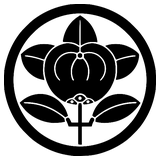
08Akechi Kikyō

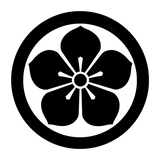
Bellflower
Associated with Akechi Mitsuhide
IN THE ATLAS Kikyō 桔梗紋
ORIGIN
The Chinese bellflower (kikyō) is one of Japan’s seven flowers of autumn. Its clean five-pointed star has made it a favourite crest since the medieval period.
HISTORY
The kikyō was the crest of the Toki clan of Mino and its branches, including Akechi Mitsuhide, whose banners are said to have carried a pale-blue bellflower.
A STORY · 物語
In 1582 Mitsuhide turned against his lord Oda Nobunaga at Honnō-ji temple. Within two weeks he himself was defeated — a reign so short that “Mitsuhide’s three days” is still a Japanese phrase for brief power.
Kusunoki Kikusui, F1 Brushed Brass
F1 BRUSHED
Kusunoki Kikusui, F2 Antique Bronze
F2 ANTIQUE
SizesM · L
FinishF1 · F2

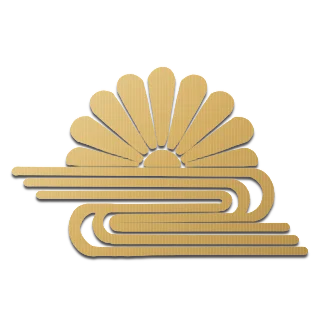
09Kusunoki Kikusui

Chrysanthemum on flowing water
Associated with Kusunoki Masashige
IN THE ATLAS Kiku 菊紋
ORIGIN
Half a chrysanthemum floating above running water. In an old Chinese tale, a boy who drank from a stream beneath chrysanthemums lived for hundreds of years.
HISTORY
The crest belongs to Kusunoki Masashige, the 14th-century general who served Emperor Go-Daigo with unshakeable loyalty until his death at the Battle of Minatogawa in 1336.
A STORY · 物語
Legend says Masashige was offered the imperial chrysanthemum, but felt it too high an honour to wear whole — so he let half of it sink beneath the water.
Mitsumori Kikkō ni Hanabishi, F1 Brushed Brass
F1 BRUSHED
Mitsumori Kikkō ni Hanabishi, F2 Antique Bronze
F2 ANTIQUE
SizesM · L
FinishF1 · F2

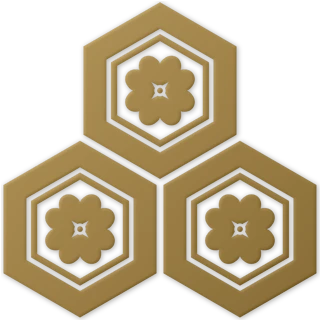
10Mitsumori Kikkō ni Hanabishi

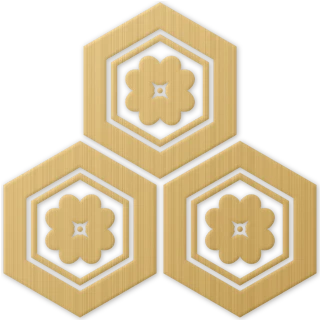
Three tortoise shells with flowers
Associated with Asai Nagamasa
ORIGIN
The hexagon is a tortoise shell (kikkō). Tortoises were said to live ten thousand years, so the shape stands for long life; each shell here holds a four-petalled hanabishi flower.
HISTORY
Three stacked shells were the crest of the Asai, lords of northern Ōmi, and are said to come from Tsukubusuma Shrine on Chikubu Island in Lake Biwa. Asai Nagamasa married Oichi, sister of Oda Nobunaga.
A STORY · 物語
In 1570 Nagamasa broke with Nobunaga to keep faith with an old ally. Legend says Oichi warned her brother with a bag of beans tied shut at both ends. Nagamasa fell at Odani Castle in 1573; his three daughters lived on to shape the age that followed.
Rokumonsen, F1 Brushed Brass
F1 BRUSHED
Rokumonsen, F2 Antique Bronze
F2 ANTIQUE
SizesS · M · L
FinishF1 · F2

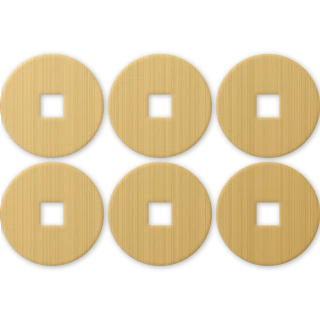
11Rokumonsen

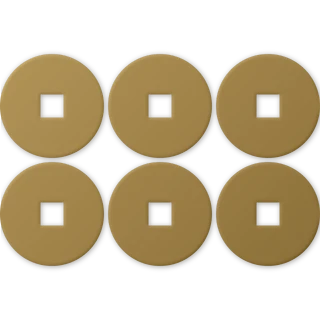
Six coins
Associated with Sanada Yukimura
IN THE ATLAS Zeni 銭紋
ORIGIN
Six mon coins: in Buddhist belief, the ferry fare across the Sanzu River to the next world. To carry them into battle was to say you were already prepared to die.
HISTORY
The Sanada of Shinano bore the six coins on their banners. Under Sanada Masayuki and his son Nobushige — better known as Yukimura — the crest became a byword for courage against the odds.
A STORY · 物語
At the Siege of Osaka in 1615, Yukimura led his red-armoured troops in a charge that broke through to Tokugawa Ieyasu’s own headquarters. He died that day; an enemy commander later called him the finest warrior in Japan.
Ichimonji ni Mitsuboshi, F1 Brushed Brass
F1 BRUSHED
Ichimonji ni Mitsuboshi, F2 Antique Bronze
F2 ANTIQUE
SizesS · M · L
FinishF1 · F2

12Ichimonji ni Mitsuboshi

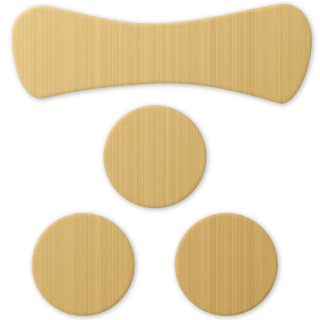
One stroke over three stars
Associated with Mōri Motonari
ORIGIN
The three stars are the belt of Orion, known in China as the “General’s Stars” and long linked to victory. The stroke above is the character for “one” — first.
HISTORY
The Mōri traced their line to the scholar-official Ōe no Hiromoto. In the 1500s Mōri Motonari grew the family from a small house in Aki into the masters of much of western Japan.
A STORY · 物語
Motonari is said to have handed his three sons one arrow each and told them to break it, then a bundle of three, which none could break. The lesson — stay together — is still told to Japanese schoolchildren.
Takeda Bishi, F1 Brushed Brass
F1 BRUSHED
Takeda Bishi, F2 Antique Bronze
F2 ANTIQUE
SizesS · M · L
FinishF1 · F2

13Takeda Bishi

Four diamonds
Associated with Takeda Shingen
IN THE ATLAS Hishi 菱紋
ORIGIN
Four lozenges set together into one large diamond (wari-bishi). The hishi shape, from the water chestnut, is among the oldest patterns in Japanese design.
HISTORY
The crest of the Takeda of Kai, a branch of the Minamoto. Takeda Shingen carried it across central Japan beside his famous banner: swift as wind, quiet as forest, fierce as fire, unmoving as the mountain.
A STORY · 物語
When rivals cut off Kai’s salt supply, Shingen’s great enemy Uesugi Kenshin is said to have sent him salt, saying he fought with swords, not with hunger. “Sending salt to your enemy” is still a Japanese saying.
Ken Katabami, F1 Brushed Brass
F1 BRUSHED
Ken Katabami, F2 Antique Bronze
F2 ANTIQUE
SizesS · M · L
FinishF1 · F2

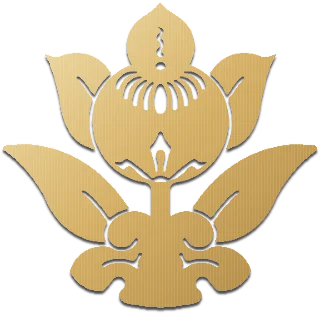
14Ken Katabami

Wood sorrel with swords
Associated with Sakai Tadatsugu
IN THE ATLAS Katabami 片喰紋
ORIGIN
Katabami, wood sorrel, roots so firmly that it is hard to clear from a garden — a wish for a family that spreads and endures. The sword blades between its leaves add a warrior’s edge.
HISTORY
Wood-sorrel crests were used by the Sakai, hereditary retainers of the Tokugawa. Sakai Tadatsugu was counted first among Ieyasu’s “Four Heavenly Kings.”
A STORY · 物語
Tradition says that after the defeat at Mikatagahara in 1573, Tadatsugu beat a great drum from the tower of Hamamatsu Castle. The pursuing Takeda, suspecting a trap, drew back.
Mitsudomoe, F1 Brushed Brass
F1 BRUSHED
Mitsudomoe, F2 Antique Bronze
F2 ANTIQUE
SizesS · M · L
FinishF1 · F2

15Mitsudomoe

Three swirling tomoe
Associated with Yamamoto Kansuke
IN THE ATLAS Tomoe 巴紋
ORIGIN
Three comma-shaped tomoe chasing one another round a circle. The swirl is often read as turning water, which is why it was painted on roof tiles to guard against fire.
HISTORY
As the crest of Hachiman, god of archery and war, the tomoe spread widely among samurai families. It is linked with Yamamoto Kansuke, the near-legendary strategist of Takeda Shingen.
A STORY · 物語
At Kawanakajima in 1561, Kansuke is said to have planned the “woodpecker” attack, tapping one side of the enemy to drive it into the other. Uesugi Kenshin saw through it, and Kansuke, taking the blame, charged to his death.
IN THE ETSY SHOP · 販売中

More crests, ready to order

Cast crest brooches outside our solid-brass series: the tomoe, the tachibana, the crests of the three unifiers and the crane in a circle, ready to order from our Etsy shop.

Crests of the warrior houses

The tomoe of the war god Hachiman, the hollyhock, quince and paulownia of the three unifiers of Japan, and the tachibana of the Ii.

Crests of good fortune

The crane in a circle, the crane that “lives a thousand years”.

SHOP ALL PIECES →

HOW TO READ A CREST NAME · 紋名の読み方

Frame, then arrangement, then motif

A crest name reads like a recipe. Maru ni chigai taka no ha is “crossed hawk feathers in a circle”: frame, arrangement, motif. The same motif can be drawn three ways, set in many frames and multiplied — which is how a few hundred motifs become twenty thousand crests.

Drawn描き方
HinataSolid shapes. The most formal.
ChūkageA broad outline. Between the two.
KageA fine outline. Semi-formal, and often a woman’s crest.
JinukiFigure and ground reversed.
Framed外枠
Kikyō (桔梗紋) crest, Maru ni Kikyō
Maru ni“In a circle”. The ring is about a tenth of the diameter; about two-thirds of common crests have one.
Raimon (雷紋) crest, Itowa ni Yotsu Raimon
Ito-waRings run from thick to thread-fine: futo-wa, chū-wa, hoso-wa, ito-wa, ke-wa.
Sumitate kakuA square stood on its corner, at 45°.
KokumochiA black disc, with the motif cut out of it in white.
Arranged配置
Myōga (茗荷紋) crest, Daki Myōga
DakiTwo motifs embracing, mirror to mirror.
Taka no Ha (鷹の羽紋) crest, Maru ni Chigai Taka no Ha
ChigaiTwo motifs crossed.
Ya (矢紋・矢筈紋) crest, Narabi Ya
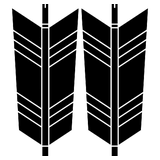
NarabiSide by side, as the paired arrows on our Iga brooch.
Kikkō (亀甲紋) crest, Mitsumori Kikkō ni Shichiyō
MitsumoriThree piled into a mound.

Also: wari (split and rejoined), nozoki (peeking up from beneath a frame), yose and oi (gathered together, or chasing nose to tail). The same grammar works for a custom brooch — tell us the motif, frame and arrangement you want.

THE TEN GREAT CRESTS · 十大家紋

The ten most often named

This is the list usually quoted, from Honda Sōichirō’s Shinshū Kamon Taizen (1982); it has no statistics behind it. Takasawa Hitoshi’s count of household shares (Kamon no Jiten, 2008) gives a different ten: katabami, mokkō, taka no ha, kashiwa, fuji, kiri, tsuta, ume, tachibana and meyui.

Courtly in origin, martial in function.
Nobles made crests; warriors made them necessary.
What was forbidden became precious.
The chrysanthemum (reserved for the imperial house in 1869 and 1871) and the Tokugawa aoi gained authority by being rare. The unprotected paulownia spread to 473 houses — 21% of those in the Kansei Chōshū Shokafu.
Plants rule.
Eight of the ten most widely used crests are plants.
Almost no law.
No current statute names the chrysanthemum as the imperial crest or national emblem, and ordinary crests have no registry.