鷹の羽紋 Taka no Ha
MEANING
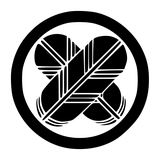
A martial crest: the hawk is brave and clever, and its feathers were used to fletch arrows. Its earliest appearance is the ‘paired hawk feathers’ on the war banner of Kikuchi Takefusa in the Mongol Invasion Scrolls; the Kikuchi genealogy claims use as early as the Hōgen era. By legend (Hokuhi Senshi) it was granted in a dream at the Aso Shrine, whose shrine crest is crossed hawk feathers; it is concentrated in southern Kyushu.
FAMILIES
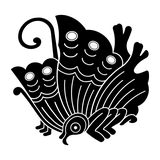
Associated with the Aso Shrine, the Kikuchi, Aso and Kai clans, the Asano (Hiroshima and Akō), Abe, Kuze and Inoue families, Katagiri Katsumoto, Ōtani Yoshitsugu (who later changed to facing butterflies) and the Saigō family
NOTES
One of the ten great crests (traditional list), and the only one not based on a plant. 3rd by share of households (Takasawa 2008). 133 variants recorded (178 in Hakkō Daiōdō). About 120 Edo-period daimyō and hatamoto houses. More than 60 designs (Wikipedia).
違い鷹の羽・並び鷹の羽・丸に違い鷹の羽(浅野/芸州鷹の羽=羽中有涡)・右違い鷹の羽・井上鷹の羽・久世鷹の羽・高木鷹の羽・福山鷹の羽(阿部氏)・白河鷹の羽・違い割り鷹の羽・抱き鷹の羽(福澤諭吉家)・三つ並び鷹の羽・八つ鷹の羽車・鷹の羽蝶