星紋・曜紋 Hoshi / Yō
MEANING
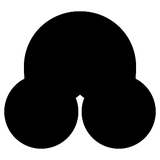
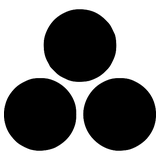
Stars are shown as circles, from the worship of heavenly bodies. Kuyō, the nine luminaries, come from Indian astrology (the seven luminaries plus Rāhu and Ketu) and reached Japan through the Sukuyō-kyō. The Chiba moon-and-star and the Sōma Kuyō come from the Myōken faith; the Mochizuki used Kuyō for the sense of ‘full moon’. The character ‘one’ means invincible, and three stars are the general’s stars.
FAMILIES
Associated with the Mōri clan (Kenmon Shokamon records ‘three stars under the character kichi’), the Nagai and Ōe clans, the Watanabe, Matsura, Yasuda, Hosokawa, Chiba and Sōma clans, Date Masamune (secondary crest), and the Katakura, Kuki, Tanuma and Hoshina clans; also the Yamatsumi Shrine and Chiba Shrine
NOTES
15th by share of households, stars and Kuyō together (Takasawa 2008). 173 variants recorded, second among non-plant crests.
一文字三つ星(長門三つ星;大江氏・毛利氏)・渡辺星(三つ星に一の字)・松浦星・三つ星(新発田氏)・六曜・七曜(田沼、九鬼)・八曜・九曜(細川、千葉、相馬、伊達、望月、保科)・離れ九曜=細川九曜(1747 細川宗孝被误杀事件后改图)・角九曜(保科・会津西郷)・九曜に半月(九州千葉)・陰九曜・剣九曜・吉川九曜・十曜~十八曜・北斗七星・三光・銀星