
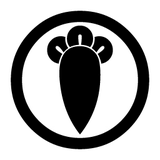
丁字紋(丁子) Chōji
MEANING
The chōji crest shows the bud of the clove tree, which is native to Indonesia and was used in Japan as a medicine and a fragrance; the dried, unopened bud is the spice. Because the bud resembles a nail, it was named with the character 丁 (nail), giving 丁字 and later 丁子. With about a hundred recorded variants it is a large family of crests: single, paired, crossed and ringed buds, wheels of three to nine, whirling tomoe forms, and versions with sword blades (ken) between the buds. The Yatsu Chōji (eight cloves) belongs to the Sanjōnishi house and the Hana Chōji to the Nagasawa Matsudaira; Sengoku users included Matsudaira (Katahara) Ietada and Shimura Sadamitsu.
FAMILIES
Associated with the Oshikōji, Matsudaira (Katahara and Nagasawa lines), Doi, Masaki and Mochizuki families, and the Sanjōnishi house (Yatsu Chōji)
NOTES
100 variants recorded.
丸に一つ丁子・八つ丁子・丸に五つ丁子・花丁子・抱き丁子
More in Plants
 藤紋 Fuji
 桐紋 Kiri
 木瓜紋 Mokkō
 片喰紋 Katabami
 橘紋 Tachibana
 柏紋 Kashiwa
 蔦紋 Tsuta
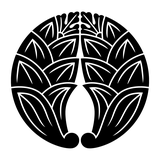 茗荷紋 Myōga
 沢瀉紋 Omodaka
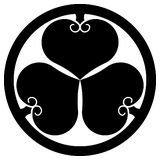 葵紋 Aoi
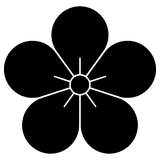 梅紋 Ume
 桜紋 Sakura
 菊紋 Kiku
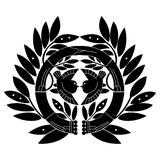 竹紋・笹紋 Take / Sasa
 松紋 Matsu
 桔梗紋 Kikyō
 牡丹紋 Botan
 杏葉紋 Gyōyō
 竜胆紋 Rindō
 瓜紋 Uri
 瓢紋 Hisago
 稲紋 Ine
 銀杏紋 Ichō
 楓紋・紅葉紋 Kaede / Momiji
 柊紋 Hiiragi
 唐花紋 Karahana
 花菱紋 Hanabishi
 葦紋 Ashi
 撫子紋 Nadeshiko
 杜若紋 Kakitsubata
 柿紋 Kaki
 杉紋 Sugi
 梶紋 Kaji
 河骨紋 Kōhone
 百合紋 Yuri
 梨紋 Nashi
 鉄線紋 Tessen
 麻紋 Asa
 粟紋 Awa
 虎杖紋 Itadori
 梔子紋 Kuchinashi
 柘榴紋 Zakuro
 水仙紋 Suisen
 田字草紋 Denjisō
 夕顔紋 Yūgao
 連翹紋 Rengyō
 綿紋 Wata
 地楡紋 Waremokō