
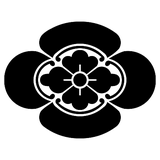
木瓜紋(窠紋) Mokkō
MEANING
Not a specific plant: it derives from the nest-shaped ka pattern on Tang-dynasty official robes, read as a wish for many descendants. The name comes from its use on the mokō, the upper border of a palace blind; popular explanations call it a cross-section of a melon or the cut of a flowering quince. It is the sacred crest of the Gion Shrine, and in some areas cucumbers are avoided during the Gion Festival (a taboo the Sekijōshi disputes).
FAMILIES
Associated with the Tokudaiji house (first used by Saneyoshi around 1156), the Oda, Asakura (Mitsumori), Takigawa Kazumasu (Maru ni Tate Mokkō), Kudō and Itō (Iori Mokkō), Hotta, Arima and Sagara; Yasaka Shrine, the Gion Shrine, Kōra Taisha and Yabu Shrine Also the Oda, Asakura, Niwa, Hotta, Itō, Arima and Sagara families.
NOTES
One of the ten great crests (traditional list). 2nd by share of households (Takasawa 2008). 244 variants recorded.
木瓜・竪木瓜・丸に木瓜・織田木瓜(五瓜に唐花)・五つ木瓜・庵木瓜・三つ盛木瓜・堀田木瓜・徳大寺木瓜・四方木瓜・剣木瓜・有馬瓜・大村瓜・六瓜・八瓜・瓜輪・五瓜に唐花・織田瓜・庵に木瓜・六つ瓜に七つ引(相良瓜)
More in Plants
 藤紋 Fuji
 桐紋 Kiri
 片喰紋 Katabami
 橘紋 Tachibana
 柏紋 Kashiwa
 蔦紋 Tsuta
 茗荷紋 Myōga
 沢瀉紋 Omodaka
 葵紋 Aoi
 梅紋 Ume
 桜紋 Sakura
 菊紋 Kiku
 竹紋・笹紋 Take / Sasa
 松紋 Matsu
 桔梗紋 Kikyō
 牡丹紋 Botan
 杏葉紋 Gyōyō
 竜胆紋 Rindō
 瓜紋 Uri
 瓢紋 Hisago
 稲紋 Ine
 銀杏紋 Ichō
 楓紋・紅葉紋 Kaede / Momiji
 柊紋 Hiiragi
 唐花紋 Karahana
 花菱紋 Hanabishi
 葦紋 Ashi
 撫子紋 Nadeshiko
 杜若紋 Kakitsubata
 柿紋 Kaki
 杉紋 Sugi
 梶紋 Kaji
 河骨紋 Kōhone
 百合紋 Yuri
 梨紋 Nashi
 鉄線紋 Tessen
 麻紋 Asa
 粟紋 Awa
 虎杖紋 Itadori
 梔子紋 Kuchinashi
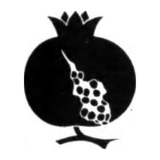 柘榴紋 Zakuro
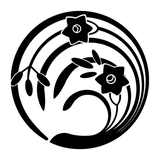 水仙紋 Suisen
 丁字紋 Chōji
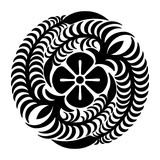 田字草紋 Denjisō
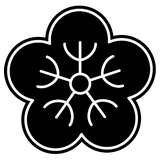 夕顔紋 Yūgao
 連翹紋 Rengyō
 綿紋 Wata
 地楡紋 Waremokō