
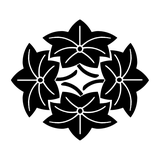
楓紋・紅葉紋 Kaede / Momiji
MEANING
The crest depicts the leaf of the kaede (maple), the plant chosen in heraldry to stand for momiji (autumn leaves). The name is said to come from kaerude, ‘frog’s hand’, after the leaf’s shape. Admired since the Heian period, it was used sparingly as a crest because leaves that redden and fall suggested transience. Its best-known bearer is the court house of Imadegawa (Kikutei), whose ‘three maple leaves in a circle’ is thought to derive from patterns in picture scrolls. Warrior users included the Ichikawa (Seiwa Genji), Takayama (Kanmu Heishi) and Yagi. Parishioners of Akiba Shrine in Hamamatsu and Tatsuta Shrine in Nara used it out of devotion, and Honkoku-ji and Takaosan Yakuō-in use it as temple crests.
FAMILIES
Associated with the Imadegawa (Kikutei) house, the Ichikawa, Takayama, Yagi and Endō; the shrine crest of Tatsuta Taisha and the temple crest of Honkoku-ji and Takaosan Yakuō-in
NOTES
32 variants recorded.
丸に三つ楓(今出川)・一つ楓・違い楓・抱き楓・楓に水・四つ紅葉・折敷に一つ紅葉
More in Plants
 藤紋 Fuji
 桐紋 Kiri
 木瓜紋 Mokkō
 片喰紋 Katabami
 橘紋 Tachibana
 柏紋 Kashiwa
 蔦紋 Tsuta
 茗荷紋 Myōga
 沢瀉紋 Omodaka
 葵紋 Aoi
 梅紋 Ume
 桜紋 Sakura
 菊紋 Kiku
 竹紋・笹紋 Take / Sasa
 松紋 Matsu
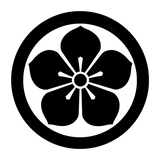 桔梗紋 Kikyō
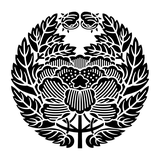 牡丹紋 Botan
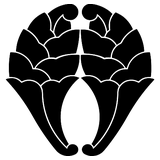 杏葉紋 Gyōyō
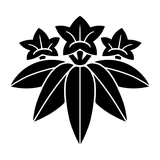 竜胆紋 Rindō
 瓜紋 Uri
 瓢紋 Hisago
 稲紋 Ine
 銀杏紋 Ichō
 柊紋 Hiiragi
 唐花紋 Karahana
 花菱紋 Hanabishi
 葦紋 Ashi
 撫子紋 Nadeshiko
 杜若紋 Kakitsubata
 柿紋 Kaki
 杉紋 Sugi
 梶紋 Kaji
 河骨紋 Kōhone
 百合紋 Yuri
 梨紋 Nashi
 鉄線紋 Tessen
 麻紋 Asa
 粟紋 Awa
 虎杖紋 Itadori
 梔子紋 Kuchinashi
 柘榴紋 Zakuro
 水仙紋 Suisen
 丁字紋 Chōji
 田字草紋 Denjisō
 夕顔紋 Yūgao
 連翹紋 Rengyō
 綿紋 Wata
 地楡紋 Waremokō