

桜紋 Sakura
MEANING
The cherry was long taken as the flower that signalled rice-planting time and was regarded as an embodiment of Konohanasakuya-hime. Accounts of its early use differ: Kamon no Iroha says samurai at first avoided it because its falling petals suggested transience, though its graceful design kept it popular, while Japanese Wikipedia notes its use from the Heian period by high-ranking houses, chiefly of Seiwa Genji descent. More than a hundred variants exist. In the Edo period it was borne by daimyō such as the Hosokawa (as an alternate crest) and the Sakurai Matsudaira and Sengoku, and by some twenty shogunal retainer houses. Shrines dedicated to Konohanasakuya-hime use it as a shrine crest, and Shiogama Shrine has its own Shiogama cherry.
FAMILIES
Associated with the Hosokawa (alternate crest), the Sakurai Matsudaira, Sengoku, Ōkubo and Oguri; some 20 Edo shogunal retainer houses; the shrine crest of Shiogama Shrine
NOTES
111 variants recorded.
桜・山桜・八重桜・八重山桜・細川桜・桜井桜・江戸桜・九曜桜・塩竈桜・分銅桜・裏桜
More in Plants
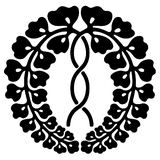 藤紋 Fuji
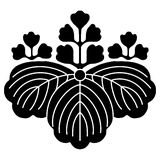 桐紋 Kiri
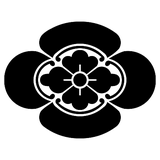 木瓜紋 Mokkō
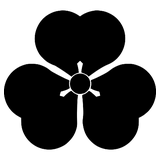 片喰紋 Katabami
 橘紋 Tachibana
 柏紋 Kashiwa
 蔦紋 Tsuta
 茗荷紋 Myōga
 沢瀉紋 Omodaka
 葵紋 Aoi
 梅紋 Ume
 菊紋 Kiku
 竹紋・笹紋 Take / Sasa
 松紋 Matsu
 桔梗紋 Kikyō
 牡丹紋 Botan
 杏葉紋 Gyōyō
 竜胆紋 Rindō
 瓜紋 Uri
 瓢紋 Hisago
 稲紋 Ine
 銀杏紋 Ichō
 楓紋・紅葉紋 Kaede / Momiji
 柊紋 Hiiragi
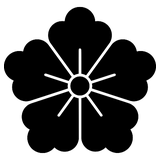 唐花紋 Karahana
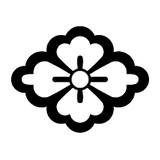 花菱紋 Hanabishi
 葦紋 Ashi
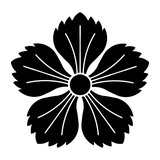 撫子紋 Nadeshiko
 杜若紋 Kakitsubata
 柿紋 Kaki
 杉紋 Sugi
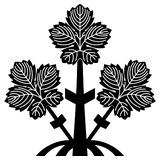 梶紋 Kaji
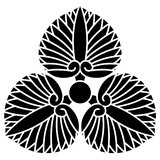 河骨紋 Kōhone
 百合紋 Yuri
 梨紋 Nashi
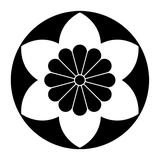 鉄線紋 Tessen
 麻紋 Asa
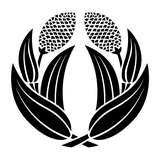 粟紋 Awa
 虎杖紋 Itadori
 梔子紋 Kuchinashi
 柘榴紋 Zakuro
 水仙紋 Suisen
 丁字紋 Chōji
 田字草紋 Denjisō
 夕顔紋 Yūgao
 連翹紋 Rengyō
 綿紋 Wata
 地楡紋 Waremokō