
The colours of heraldry: tinctures, furs and the rule of tincture
Heraldry has only nine colours, and their names sound like nothing else in English. Most of them came from the French of the medieval heralds, and a few from as far away as Persia.
The colours of heraldry are called tinctures. There are two metals, five colours and two furs, and almost every coat of arms in Europe is made of them. Heraldry cares about which tincture is meant, not about the exact shade: a red may be painted scarlet or crimson, and the arms are the same.
The two metals
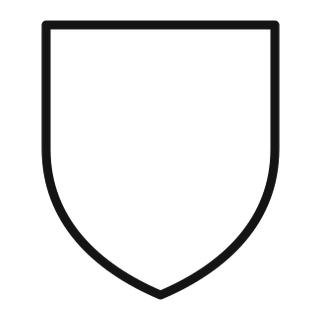
Or is gold, painted with gold leaf in grand work and in yellow in everyday work. Argent is silver, almost always painted white, because silver leaf turns black as it tarnishes. A white field and a silver one are the same thing in heraldry.
The five colours
Gules, red, is the commonest colour of medieval heraldry. Its name, from the Old French gueules, may come from the red-dyed fur worn at the throat. Azure, blue, comes through Arabic from the Persian lāzhward, lapis lazuli. It was rare in the twelfth century and spread with the arms of the French kings, blue strewn with gold lilies, and with the cult of the Virgin, whose colour it was. Vert, green, was always rare. French heralds call it sinople, a word that first meant red and only later came to mean green. Sable, black, takes its name from the costly fur of the sable. Purpure, purple, is the rarest of the five.
The two furs
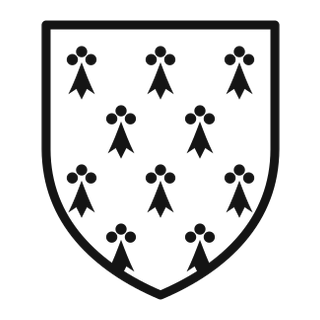
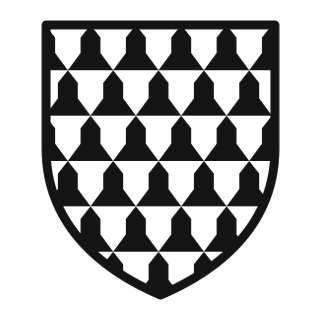
Medieval nobles lined their cloaks with fur, and two furs became tinctures in their own right. Ermine is white with black spots, the black tail tips of stoats in their winter coats, sewn onto the white skins. Brittany has borne plain ermine since 1316. Vair is the fur of the red squirrel’s grey-blue winter back and white belly, sewn in rows of alternating bells, and drawn in blue and white. Variants such as ermines, white spots on black, and counter-vair, with the bells set base to base, are counted as the same two furs.
Colour without colour: hatching
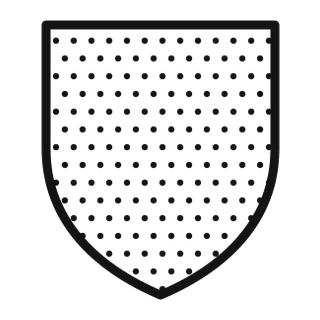
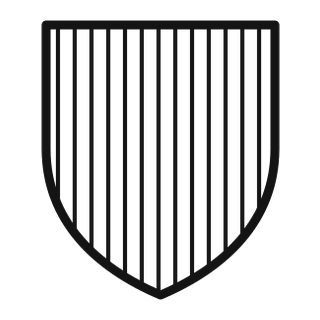
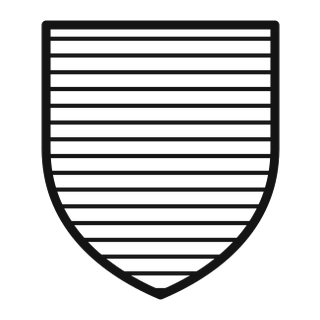
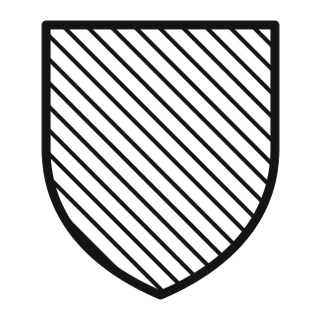
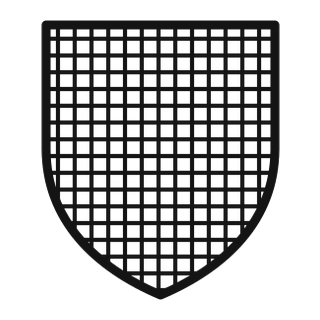
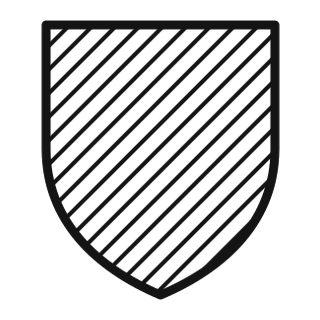
When arms were engraved on copper or cut in wood for books and seals, there was no colour to show. In 1638 the Jesuit Silvester Petra Sancta published the system that is still used. Gold is dots. Silver is left plain. Red is vertical lines, blue horizontal lines, and black both together. Green is diagonal lines from the upper dexter corner and purple diagonal lines from the other side. Seen once, it can be read on any old bookplate, seal or engraved spoon, and it is how the colours of a coat of arms can be carried over into a single-coloured material such as our brass.
The rule of tincture
The first rule of heraldry is that metal is not put on metal, nor colour on colour. A gold lion goes on a red or a blue field, never on a silver one, and a red cross goes on silver or gold, never on blue. The rule keeps arms legible from far off, which on a battlefield was the whole point. Furs may go on anything, and so may charges shown in their natural colours, which heralds call proper. The arms of the crusader Kingdom of Jerusalem broke the rule on purpose, with gold crosses on silver: arms that no one else could bear, for the kingdom above all others.
Colours that mean something?
Renaissance writers gave each tincture a virtue, a planet and a precious stone, and some even blazoned the arms of princes in gems and those of lords in planets. These schemes were literary games, and the meanings do not agree from one writer to the next. Medieval knights chose their colours for the same reasons people choose them today: the arms of a lord they served, of a family they married into, or simply because they looked fine. Our Heraldry Atlas gives where each colour is seen.