
How to read a coat of arms
A coat of arms is not, strictly, a picture. It is a sentence, the blazon, and any painter may draw it in their own way, as long as the drawing follows the words.
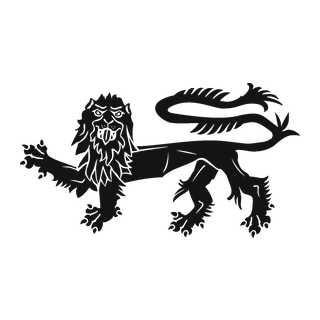
Heraldry grew up on the battlefields and in the tournaments of the twelfth century, when a knight in a closed helmet could be known only by the colours and shapes on his shield. Within a few generations the heralds, who announced the knights at tournaments and kept the rolls of their arms, had built a precise language to describe them. It is still used today. The blazon of the royal arms of England, for example, is Gules, three lions passant guardant in pale Or: on red, three gold lions, walking, faces turned to the viewer, one above another.
1. Stand behind the shield
Right and left in heraldry are the right and left of the person holding the shield, not of the viewer. The bearer’s right is dexter, which is on your left as you look at it; the bearer’s left is sinister, on your right. The top of the shield is the chief and the bottom the base. A beast that faces dexter, as nearly all of them do, therefore looks to your left.
2. The field comes first
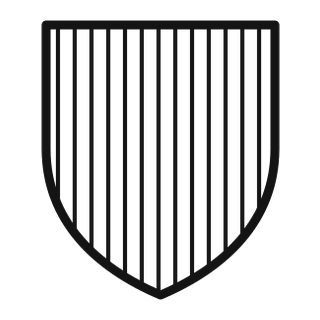
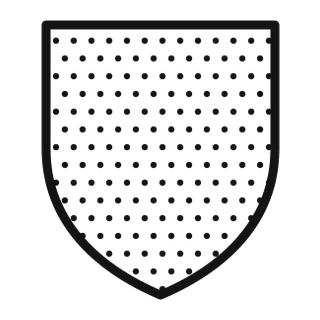
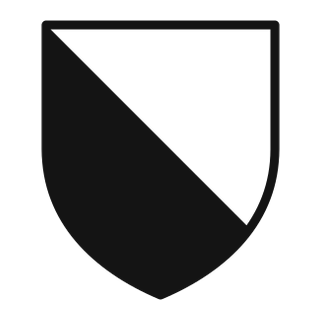
A blazon always begins with the field, the background of the shield. It may be a single tincture: one of the two metals, or (gold) and argent (silver), one of the colours, gules (red), azure (blue), vert (green), sable (black) and purpure (purple), or one of the furs, ermine and vair. Or it may be divided by straight lines: per pale down the middle, per fess across, per bend on the diagonal, quarterly in four. Our guide to the tinctures explains where the names come from.



3. Then the ordinary
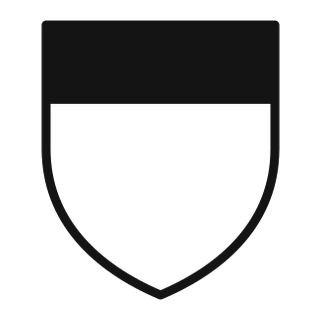
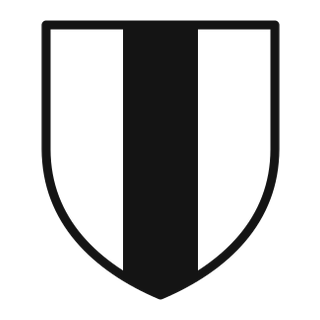
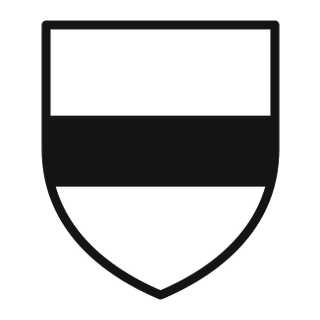
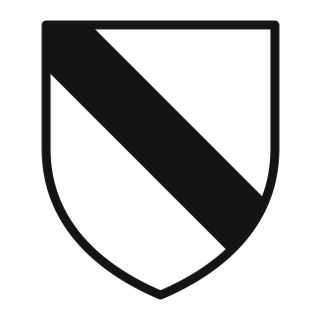
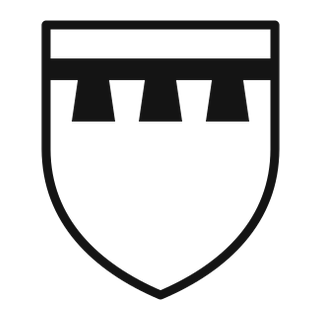
Next comes the main charge, very often one of the broad geometric bands called the ordinaries: the chief across the top, the pale down the middle, the fess across it, the bend from the upper dexter corner, the chevron, the cross and the saltire. Each is named with its tincture after it. The arms of Austria are Gules, a fess argent, red with a white band across, which became the red, white and red of its flag.


4. Then the charges, and where they stand
After the ordinary come the smaller charges: beasts, birds, flowers, stars and objects, each with its number, its posture and its tincture. The arms of the Beauchamp earls of Warwick are Gules, a fess between six cross crosslets Or: red, with a gold band across and six small gold crosses, three above and three below. A lion has a word for every pose: rampant, rearing on one hind leg; passant, walking; guardant, looking out at you; sejant, sitting. An eagle with its wings spread is displayed.
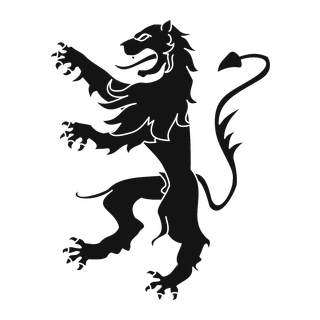
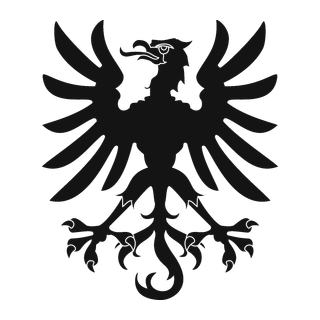
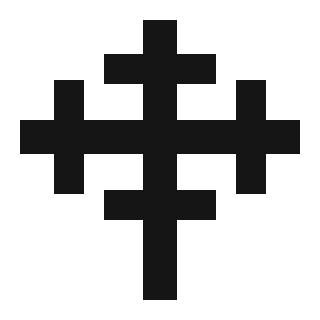

Heralds dislike repeating themselves. If a charge has the same tincture as something named earlier, the blazon may say “of the first” or “of the field” instead of naming the colour again, and older blazons are full of such shorthand.
5. One rule above all
The rule of tincture says that a metal is not put on a metal, nor a colour on a colour: gold on red or blue, never gold on silver or red on blue. It keeps arms legible at a distance, which was the point of them. Furs, and charges shown in their natural colours, are outside the rule, and the famous exception is the arms of the crusader Kingdom of Jerusalem, gold crosses on silver, allowed for a kingdom above all others.
6. Telling relatives apart
In medieval England a coat of arms belonged to one man at a time, and his sons added small marks of cadency while their father lived: a label for the eldest, a crescent for the second, a mullet for the third, a martlet for the fourth, and so on. Scotland uses a bordure, a border of a different tincture, for each younger line. Arms were also joined by marriage and inheritance: a husband and wife set their arms side by side on a shield divided per pale, and the heir of an heiress quartered her arms with his own.


7. The shield is the coat of arms
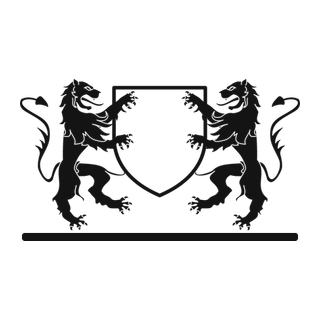
The shield, with what is on it, is the arms. A full achievement adds the helm, the crest on its twisted wreath, the mantling hanging from the helm, the supporters holding the shield, the motto and sometimes a coronet of rank. In everyday English “family crest” is used for the whole thing, but the crest is only the figure on top of the helm.


Does my surname have a coat of arms?
Usually not in the way the souvenir shops suggest. In England and Scotland arms are granted to a person and pass to their descendants, so two families with the same surname may have quite different arms, or none. In many other countries anyone may adopt arms, as long as they do not take someone else’s. If you have a coat of arms in the family, its blazon is the thing to keep: with it any artist can draw your arms correctly, and we can redraw them for our solid-brass round frame, with the tinctures shown in heraldic hatching.