
Kamon and European heraldry compared
In the same century, at opposite ends of Eurasia, warrior societies began to hand down a sign from father to son. The two systems never met until the nineteenth century, and they grew up alike in some ways and quite unlike in others.
Europeans who reached Japan in the nineteenth century called the kamon “Japanese heraldry”, and the English word for it is still “crest”. The comparison is useful, as long as it is not pushed too far.
Two beginnings in one century
In Japan, court nobles of the late Heian period marked their ox-carts and robes with patterns that came to belong to their families, and by the wars of the twelfth century warriors were carrying them on banners and armour. In Europe, the first hereditary arms appear on knights’ seals in the 1130s and 1140s. The enamel plaque from the tomb of Geoffrey Plantagenet, who died in 1151, shows him with a blue shield of gold lions. In both places the signs answered the same need: to be known at a distance, in war and at court.
Colour, or the lack of it
The deepest difference is colour. A coat of arms is defined by its tinctures, and Azure, a bend Or and Gules, a bend Or are the arms of two different families. A kamon has no fixed colour at all. It is dyed in white on a black kimono, painted in gold on lacquer, carved into stone, and it is still the same crest. What identifies a kamon is its drawing, and what identifies a coat of arms is its words.

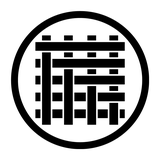
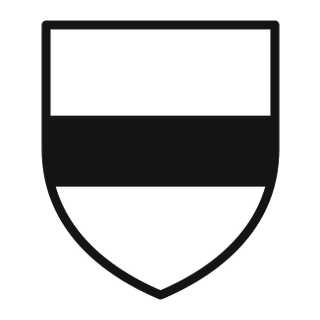
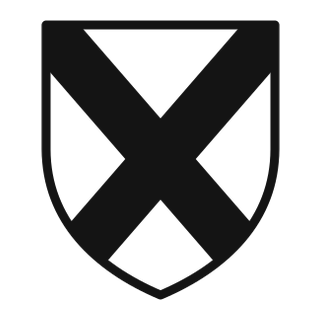
Even the shapes can coincide. The Ashikaga shoguns bore two bars in a circle, one of the bar crests, which a herald would read as two bars; the cross brace, two diagonal beams crossed, is a saltire. The meaning is not the same, but the eye that drew them was solving the same problem.
The circle and the shield
Arms are drawn on a shield because they began on shields, and their whole grammar, chief and base, dexter and sinister, describes the places on it. A kamon is usually balanced in a circle, and its name describes it from the outside in: maru ni mitsuba aoi, “three hollyhock leaves in a circle”. Both are systems of description. A herald and a Japanese crest maker can each reconstruct the sign from its name alone.





Who owns the sign
In England, arms have been granted by the heralds of the College of Arms, founded in 1484, and in Scotland by the Lord Lyon, whose register dates from 1672. Arms there belong to a person and pass to their descendants, and to use another’s arms can be an offence. In much of continental Europe anyone may adopt arms of their own. Japan never had a heraldic authority. A household chose its crest, and could change it or take a second one. Only a few crests were restricted. The Tokugawa kept the hollyhock to themselves in the Edo period, and in 1869 the Meiji government forbade the imperial chrysanthemum to anyone else. So two Japanese families with no connection may share a crest, which a herald would find very strange.
Telling the family apart
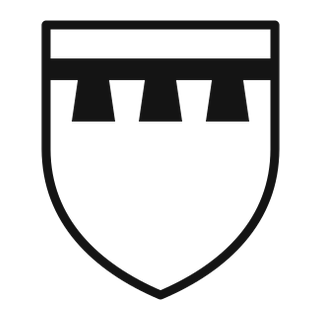
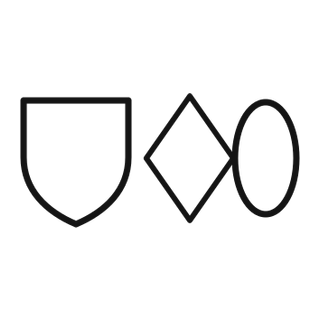
Both systems needed a way to tell a branch from the main line. English heraldry adds small marks of cadency for younger sons, Scotland a bordure, and continental heraldry changes a tincture or adds a charge. Japanese branch families keep the motif and change its setting: a frame added or taken away, the motif drawn in outline, three of them in place of one. Women, too, were treated apart: in English heraldry a woman bears her arms on a lozenge rather than a shield, and in parts of western Japan women inherited a crest from their mother’s side, the onna-mon.

Where the signs are seen
Coats of arms were carried on shields and banners, pressed into seals, carved over doorways and on tombs, and painted on carriages. Kamon were dyed on formal kimono, painted on lanterns and lacquer, set on roof tiles and carved on the family grave. Both ended up on the same kind of object: the small, permanent things a family keeps, and the stone it is buried under.
A shared vocabulary
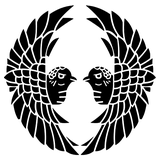
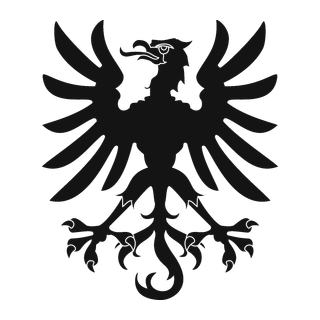
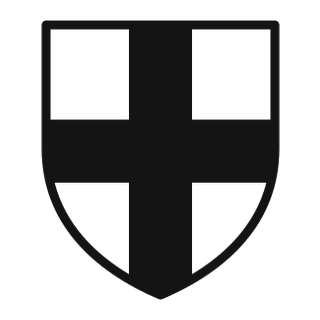
Many motifs appear in both: the eagle and the hawk’s feathers, the lily, the shell, the moon and the stars, the cross. Our Kamon Atlas and Heraldry Atlas link them where they meet. In our round brass frame, a kamon fits naturally. A coat of arms keeps its shield, with its colours carried over in heraldic hatching.